

So, you're ready to choose the batting for your next quilt. This is where the magic really starts to happen. While it’s tempting to just grab a bag of Hobby Lobby quilt batting and call it a day, taking a moment to understand what's inside that bag can completely change the look and feel of your finished project.
Your Guide to Choosing the Right Quilt Batting
Think of batting as the soul of your quilt. It's the hidden middle layer, but it’s responsible for everything from warmth and weight to the beautiful texture that makes your quilting stitches pop. Just like a chef picks the perfect ingredients, a quilter chooses batting to give their project a specific personality. Get it right, and you’ll turn a simple quilt top into a cherished heirloom.
Of course, walking down the batting aisle can feel a little overwhelming. You’re hit with terms like ‘loft,’ ‘drape,’ ‘scrim,’ and numbers like ‘80/20.’ These aren't just jargon; they're your road map to how your quilt will look and feel. Are you going for a flat, traditional look that shows off every tiny stitch? Or do you want a puffy, cozy comforter perfect for snuggling under? The answer is all in the batting.
Understanding Key Batting Concepts
Let's break down the two most important terms you'll run into:
- Loft: This is just a fancy word for thickness. A low-loft batting is thin, creating a flatter quilt that drapes beautifully. It's perfect for wall hangings or quilts with a modern, sleek vibe. A high-loft batting, on the other hand, is thick and fluffy, giving you a puffier quilt where the quilting stitches create deep, gorgeous definition.
- Drape: This is all about how the quilt hangs and folds. A quilt with great drape is soft, flexible, and cuddly. You'll find that natural fibers like cotton and wool usually give you a much softer, more fluid drape than some of the stiffer polyester options.
The passion for quilting is bigger than ever. The global quilt batting market was valued at a massive USD 1.2 billion in 2024, and that number just keeps growing. It really shows how much home quilters and craft retailers care about finding quality materials. You can see the full market growth forecast over at reportsanddata.com.
Choosing batting isn’t just a technical step; it’s an artistic one. The material you select is your first decision in defining the quilt's personality—whether it will be a lightweight summer throw, a breathable baby blanket, or a warm, substantial bedspread for cold nights.
This guide is here to be your friendly compass. We'll walk through all the different materials, from classic 100% cotton to luxurious wool, and compare what each one does best. My goal is to help you move beyond just grabbing the nearest package of Hobby Lobby quilt batting and start choosing your materials with confidence.
Whether you’re working on your very first quilt or stocking up your professional longarm studio, you'll be ready to make the perfect choice. If you want to start with the basics, you might be interested in our deep dive into what is quilt batting.
Comparing the Most Popular Batting Materials
Picking a batting is a lot like choosing the right kind of flour for a recipe; what you select completely changes the final result. While strolling through the Hobby Lobby quilt batting aisle is a great way to see what’s out there, truly understanding the workhorses of the quilting world will help you pick the perfect middle layer for any project.
There are three materials you’ll see again and again: 100% cotton, the ever-popular 80/20 cotton-poly blend, and the luxurious option, wool. Each one brings something unique to the table, and your choice will shape the quilt's drape, its warmth, and even how it looks after that first wash.
The Classic Choice: 100% Cotton
For quilters who love tradition and a soft, natural hand, 100% cotton batting is the undisputed classic. Think of it as the comfortable, breathable heart of your quilt. It's a natural fiber that's perfect for creating quilts that feel substantial but never stuffy, making it a go-to for everything from baby quilts to heirloom bedspreads.
One of the most loved traits of cotton is how it ages. Most 100% cotton battings shrink just a little after the first wash, which creates that classic, crinkly, well-loved look that so many quilters are after. This gentle puckering gives the quilt a beautiful texture that really makes the stitching pop.
It's no wonder cotton batting is still king in the quilting world. It's on track to hold 45% of the global market share in 2024, making it a top seller for both big suppliers and home quilters. Everyone loves it for its natural breathability, softness, and lightweight warmth.
This little flowchart is a great way to visualize how your main goal—coziness or stitch definition—can point you toward the right material.
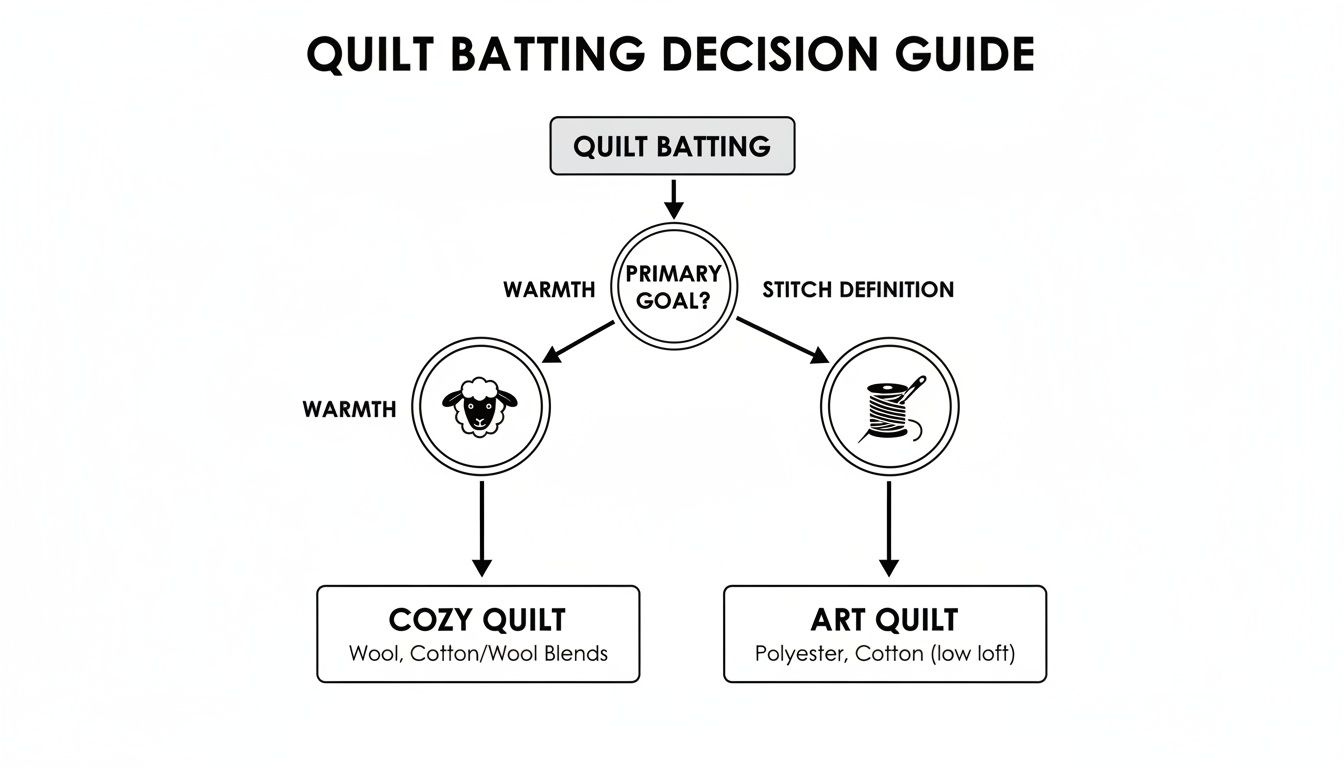
As you can see, the path is pretty clear. If you’re aiming for a super cozy, warm quilt, wool is a fantastic choice. But if you want every single stitch to stand out with crisp clarity, you’ll want a material that provides a flatter, more stable foundation.
The Versatile 80/20 Cotton-Poly Blend
So, what if you want the softness of cotton but with a bit more stability and durability? Meet the 80/20 cotton-poly blend, often called the "best of both worlds." This is hands-down the most popular all-purpose batting for good reason, mixing 80% cotton fibers with 20% polyester fibers.
This combination really does give you the best qualities of both:
- Softness and Breathability: The high cotton content keeps it feeling soft and draping beautifully.
- Strength and Loft: That little bit of polyester adds resilience, reduces shrinkage, and gives the batting a slightly higher loft than pure cotton without getting puffy.
- Stitch Definition: The blend is stable enough to make your quilting stitches look great.
Because it resists bunching and can be quilted at wider intervals than many all-cotton options, the 80/20 blend is a huge favorite among longarm quilters. It’s forgiving, it’s reliable, and it just works.
If you're just starting out or need a can't-go-wrong option for almost any quilt, an 80/20 blend is a fantastic choice. It shrinks less than cotton and strikes that perfect balance between modern performance and a traditional feel.
The Luxurious Feel of Wool
When your goal is maximum warmth without the weight, wool batting is in a class of its own. Imagine the coziest, lightest sweater you own—that’s the feeling wool brings to a quilt. It’s a natural fiber prized for its incredible insulating abilities, keeping you toasty in the winter yet surprisingly breathable in the summer.
Wool is also amazingly resilient. It resists creases, so your quilt will stay smooth even after being folded up for storage. For quilters, its standout feature is its lofty nature, which creates gorgeous, puffy definition around every stitch. This makes it a top pick for show quilts or any project where you want the quilting itself to be the star.
While it feels like a premium choice, it’s surprisingly easy to care for, as most modern wool battings are treated to be machine washable. For a lightweight, breathable, and incredibly warm quilt with stunning texture, wool is an investment you’ll be glad you made.
Batting Material Comparison Chart
To help you see the differences side-by-side, here’s a quick rundown of how these three popular materials stack up against each other. Each one excels in different areas, so this chart can help you pinpoint the best fit for your next project.
| Attribute | 100% Cotton with Scrim | 80/20 Cotton/Poly Blend | 100% Wool |
|---|---|---|---|
| Drape | Soft and traditional; gets softer with washing. | Excellent drape, very flexible. | Very soft and light, drapes beautifully. |
| Loft | Low; creates a flatter, traditional look. | Low-to-mid; slightly more puff than cotton. | High loft; creates excellent stitch definition. |
| Shrinkage | 3-5%; creates a classic "crinkled" look. | Minimal, around 2-3%. | Very low to none (0-2%). |
| Warmth | Medium; breathable for year-round use. | Medium; good all-purpose warmth. | High warmth-to-weight ratio; excellent insulator. |
| Best For | Traditional quilts, baby quilts, wall hangings. | Everyday quilts, longarm quilting, versatile projects. | Show quilts, heirloom pieces, cold-climate quilts. |
| Stitching Distance | Up to 8-10 inches apart (with scrim). | Up to 10 inches apart. | Up to 4-6 inches apart. |
Hopefully, this comparison makes your decision a little easier! For an even more detailed breakdown of these and other materials, you can always check out our complete quilt batting comparison chart for more info.
When to Use Specialty Quilt Battings
Once you get past the go-to cottons and poly blends, you’ll discover a whole world of specialty battings. These aren’t just novelties; they’re brilliant solutions to specific quilting challenges. While your favorite everyday batting handles most jobs just fine, knowing when to grab something special is what really takes your quilting to the next level.
Think of these as the secret weapons in your quilting arsenal. They solve those frustrating little problems that can pop up, saving you time, making your quilts look more professional, and even opening the door to projects you couldn't tackle before.
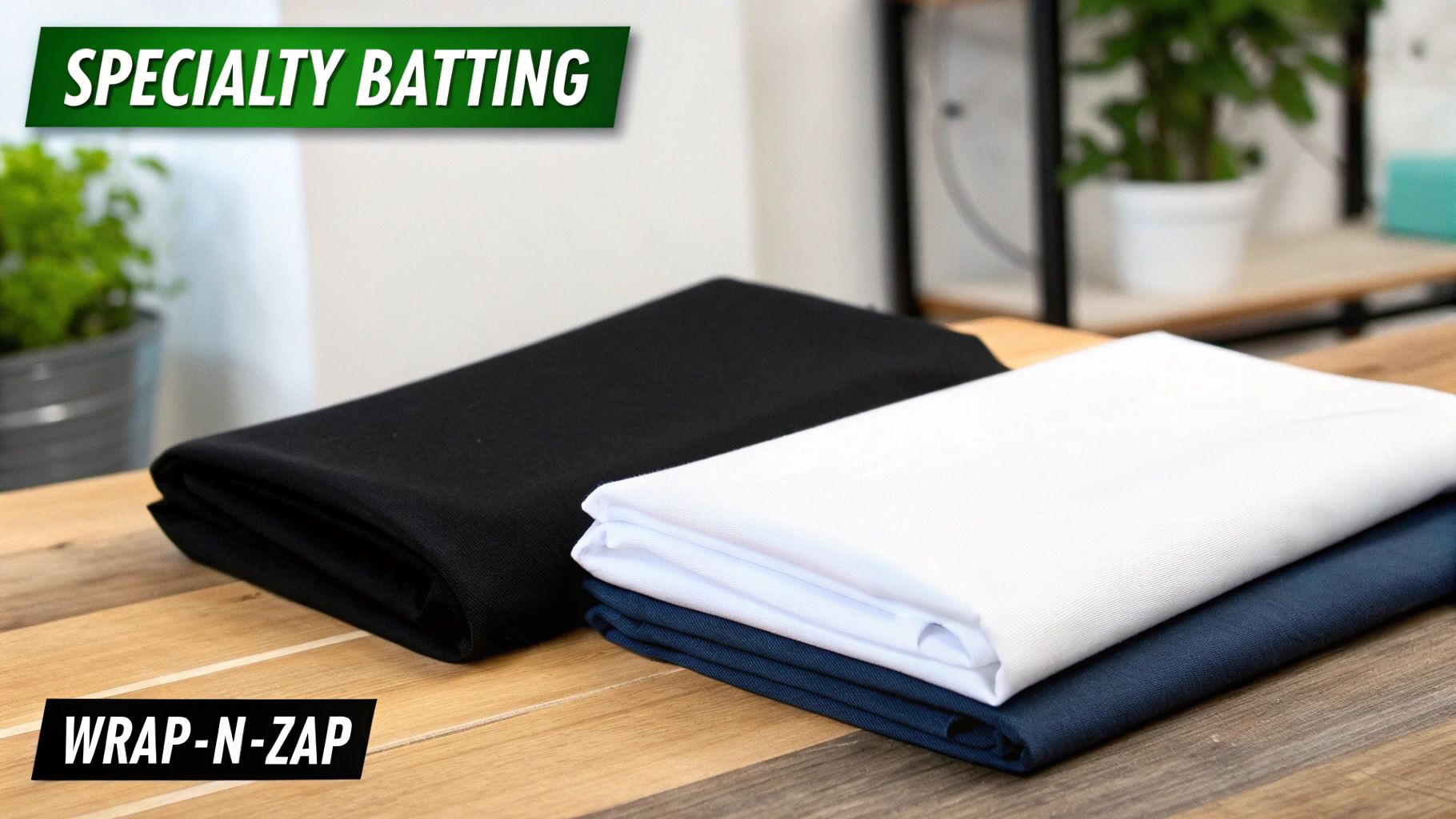
For Those Dark and Moody Quilts
You know the feeling. You've just finished a gorgeous quilt with deep navy, rich burgundy, or striking black fabrics, only to spot tiny white fibers poking through the top. It’s called "bearding," and it can drive a quilter crazy. This is exactly why black quilt batting was invented.
Black batting is designed specifically for quilts with dark tops and backings. By matching the batting to the fabric, any fibers that might try to migrate through the weave become practically invisible. It’s the key to getting that crisp, flawless finish on modern quilts or any project where you want your dark colors to look deep and true without any distractions.
The Ultimate Time-Saver for Basting
Let’s be honest, basting can be a real chore. Whether you’re crawling around on the floor with safety pins or dealing with the fumes from spray adhesives, it’s often the least fun part of making a quilt. That’s where fusible batting comes in to save the day.
This clever batting has a light, heat-activated adhesive on both sides. You just layer your quilt sandwich, press it with an iron, and you're done.
- No more pins! Say goodbye to poking your fingers and finding tiny puckers later.
- No spray fumes. It’s a fantastic option if you’re sensitive to the aerosols in basting sprays.
- A secure hold. It creates an even, temporary bond that stops layers from shifting while you quilt, which is perfect for smaller projects like table runners and wall hangings.
The bond is just strong enough to get you through the quilting process. After the first wash, the adhesive disappears, and your quilt becomes wonderfully soft and drapey. For many of us, the convenience alone makes fusible batting a must-have. And if you're curious about other ways to add stability, learning what scrim in batting is can be really helpful.
Safety First for Microwaveable Projects
Sometimes, choosing the right batting isn't just about looks or convenience—it's about safety. If you want to make fun gifts like potato baking bags, soup bowl cozies, or tortilla warmers, using the right materials is absolutely non-negotiable. For these projects, you need something like Pellon's Wrap-N-Zap.
Wrap-N-Zap is made from 100% natural cotton fibers. This is the critical part. Synthetic materials, like the polyester fibers or scrim found in many other battings, can melt or even catch fire in a microwave.
Grabbing a standard Hobby Lobby quilt batting blend for a project that's going in the microwave is a serious fire hazard. You must use a product specifically made and labeled for microwave use. Wrap-N-Zap gives you peace of mind, ensuring that your thoughtful handmade gifts are both charming and completely safe to use.
Buying Batting by the Roll for Your Studio
For any serious quilter or longarm studio owner, there comes a point when buying those pre-cut batting packages just doesn't make sense anymore. Making the leap to buying batting by the roll is a true game-changer. It’s like graduating from buying single-serving snacks to stocking your pantry for the month—it signals a real shift in how you approach your craft, turning it into a smoother, more cost-effective operation.
Let's be honest, there’s nothing more frustrating than getting halfway through a project only to realize you've run out of batting. Buying a 30-yard or 40-yard roll completely eliminates that headache. You’ll always have what you need on hand, ready to go for that next client quilt or your own late-night creative spark.
But this isn't just about convenience. It’s a smart financial move that cuts down your cost per yard and drastically reduces waste.
Choosing the Right Width for Your Projects
One of the best parts about buying in bulk is getting to choose the perfect width for your work. Rolls come in a few standard sizes, and picking the right one will save you time, money, and the pain of piecing batting scraps together.
- 90" or 96" Widths: These are the real workhorses of the quilting world. A 96-inch roll is perfect for the most common projects—throw quilts, lap quilts, and even twin-size quilts. It’s an incredibly versatile choice for longarmers who see a bit of everything come through their studio.
- 108" or 120" Widths: If you’re known for tackling bigger quilts, these wider rolls are an absolute must. A 120-inch roll lets you handle king-size projects with ease, giving you a beautiful, seamless finish without having to join batting pieces.
Having a large roll ready on your quilting frame or tucked away in your studio means you can cut exactly what you need every single time. Say goodbye to those awkward leftover strips and piles of scraps that come with pre-packaged batting.
This shift toward buying in bulk is driven by a huge and passionate community. With roughly 20 million quilters in the U.S. alone, the demand for high-quality materials is massive. In fact, North America commands a whopping 38% of the global quilt batting market, a number that speaks volumes about how dedicated quilters are to their craft and their willingness to seek out specialty products beyond what the big-box craft stores offer.
The Economic and Workflow Benefits
Investing in a full roll of batting is so much more than just stocking up—it’s an investment in your workflow and your bottom line. Longarmers and dedicated hobbyists who make the switch quickly find that the initial cost pays for itself over and over again.
For a professional longarm studio, having a go-to batting like an 80/20 blend always on the roll means you can offer consistent service and reliable pricing to your clients. It takes supply chain stress off your plate so you can just focus on the quilting.
Think about all the benefits that start to stack up:
- Lower Cost Per Project: The price per yard drops significantly when you buy in bulk versus grabbing single packages.
- Uninterrupted Workflow: You'll never have to hit pause on a project to run out to the store for more batting again.
- Reduced Waste: Cutting exactly what you need for each quilt means fewer unusable scraps and a much more sustainable process.
- Consistency: Working from a single roll ensures a uniform look, feel, and finish across multiple projects, which is especially important for professionals.
Ultimately, moving to buying by the roll is a strategic decision that shows you're serious about your craft. It gives you the freedom to quilt whenever inspiration strikes and the professional setup to take on any project that comes your way. If you’re ready to take this step, our guide on finding wholesale quilt batting rolls can help you explore your options.
From Prep to Pins: Techniques for a Perfect Finish
You've picked out the perfect batting—that's a huge step! But even the highest quality batting needs the right touch to truly shine. How you handle it from here on out is what separates a smooth, heirloom-quality quilt from a frustrating bundle of puckers.
Think of this as the hands-on part of the process, where a little know-how makes all the difference.
From the very first wash to the final stitches, your attention to detail is what ensures your quilt will not only look stunning but will also stand the test of time. Let's get into the skills that turn a good quilt into a great one.
The Great Debate: To Wash or Not to Wash?
One of the first questions I always hear is, "Should I pre-wash my batting?" The honest answer? It completely depends on the look you're going for.
If you're using 100% cotton batting, pre-washing is a pretty common choice. Cotton naturally shrinks about 3-5%, and washing it beforehand gets most of that out of the way. The result is a finished quilt that lies beautifully flat and smooth, perfect for a modern, crisp aesthetic.
On the other hand, many of us intentionally skip this step. When you quilt with unwashed cotton batting, it shrinks up just a bit during that first wash after the quilt is finished. This is what creates that wonderfully puckered, crinkly texture we all associate with a cozy, vintage quilt. It just feels like home.
The choice to pre-wash is purely about the final look. Do you want a modern, flat finish or that cozy, antique crinkle? Your answer tells you whether to head to the washing machine or straight to the quilting table.
For other batting types, the decision is much more straightforward. Most 80/20 cotton/poly blends, polyester, and wool battings have very little shrinkage, so you can skip the pre-wash. Just be sure to glance at the manufacturer's instructions, but you can usually move right along with these materials.
Mind the Gap: Understanding Quilting Distance
Once your quilt sandwich is layered and ready, it's time to stitch everything together. But how far apart can those quilting lines be? This is where the recommended quilting distance comes in, and it's a critical detail. It’s the maximum space you can leave between stitches before the batting starts to shift, separate, or get lumpy inside your quilt over time.
Ignoring this is a surefire way to end up with a misshapen quilt after a few trips through the laundry. Sticking to the recommendation keeps your quilt stable and looking great for years.
- Batting with Scrim: A scrim is a very thin stabilizer that's needle-punched right into the batting. It adds a surprising amount of strength, allowing for a much wider quilting distance—often up to 8-10 inches apart! This is a game-changer for longarmers or anyone who loves a minimalist quilting design.
- Batting without Scrim: More traditional battings need denser quilting to keep all those soft fibers from shifting around. Here, you'll see a much smaller recommended distance, usually around 3-4 inches.
- Wool Batting: Wool is delightfully lofty, but those springy fibers need to be locked in place. You'll typically need to quilt every 4-6 inches to keep it secure.
This number is one of the most important specs you'll find on any batting package, whether you're at a specialty shop or browsing the Hobby Lobby quilt batting aisle. It really dictates your quilting plan and ensures the whole thing holds together beautifully.
Basting: Your Best Friend for a Pucker-Free Finish
The last step before the real fun begins is basting—the art of temporarily holding your quilt top, batting, and backing together. Nailing this step is your best defense against shifting layers, puckers, and annoying tucks.
While old-school pin basting certainly works, many modern quilters (myself included) swear by spray basting, especially for larger quilts. It’s fast, effective, and gives you a wonderfully even hold.
Just find a large, clean surface and lightly spray an even layer of temporary adhesive between the backing and the batting, smoothing it out from the center. Do the same for the batting and the quilt top. This little bit of prep work creates a perfectly smooth, secure quilt sandwich that makes the actual quilting process an absolute joy.
Your Top Quilt Batting Questions, Answered
Let's be honest, walking into the world of quilt batting can feel a little overwhelming. You've got questions, and that's a good thing! Getting the right answers can be the difference between a quilt you absolutely adore and one that just... isn't quite right.
We get it. Whether you're standing in a craft store aisle staring at a wall of packages or trying to decipher the lingo online, it's easy to get confused. So, let's clear things up and tackle some of the most common questions quilters have.
What’s the Real Difference Between Batting from a Specialty Shop vs. Hobby Lobby?
This is such a great question because it gets right to the heart of where you source your supplies. The main differences really come down to three things: selection, quality, and how you can buy it.
Craft stores like Hobby Lobby are fantastic for convenience. They’re perfect for a beginner who needs one package for their first quilt or for anyone who needs something right now for a last-minute baby shower gift. You'll mostly find pre-packaged batting in standard bed sizes (crib, twin, queen) and a few popular, all-purpose blends.
A specialty online store, on the other hand, is built for quilters who are serious about their craft. Here’s what sets them apart:
- A World of Options: You’ll find a much deeper selection—premium wool for a lofty quilt, black batting that won't peek through dark fabrics, fusible options to save you time, and even specialty products like Pellon's Wrap-N-Zap for microwave-safe projects.
- The Best Brands: These shops stake their reputation on carrying trusted, high-performance brands like Hobbs and Pellon. These are the names longarm quilters rely on for consistent, beautiful results every time.
- Buying in Bulk: This is the game-changer. Specialty suppliers let you buy batting by the roll—in huge widths like 96", 108", and 120". This not only brings your cost per yard way down but also means less waste and fewer seams in your big quilts.
Here's a good way to think about it: Hobby Lobby is your neighborhood grocery store—great for grabbing the basics. A specialty shop is the gourmet market you go to for specific, high-quality ingredients that will take your project to the next level.
What Does "80/20" Actually Mean on the Package?
You see "80/20" on batting everywhere, and for good reason. It’s the tried-and-true workhorse of the quilting world. The label simply tells you the fiber content: 80% cotton and 20% polyester. This blend is so popular because it gives you the best of both worlds.
The 80% cotton gives you that soft, breathable, natural feel that makes a quilt so comforting. It helps the quilt drape beautifully and keeps it from feeling stuffy, making it perfect for snuggling year-round.
That little bit of 20% polyester is what makes the magic happen. The synthetic fibers add strength, durability, and just a touch more loft (or puffiness) than you'd get from pure cotton. An 80/20 blend is also more resistant to wrinkles and shrinks less, making it a super reliable and forgiving choice.
For longarm quilters, the 80/20 blend is an absolute dream. That polyester provides just enough stability to allow for quilting stitches up to 10 inches apart without ever worrying about the batting shifting or bunching up inside. It’s hands-down one of the most versatile and cost-effective choices for almost any project.
How Do I Choose the Right Loft for My Quilt?
"Loft" is just the quilter's term for the thickness and puffiness of the batting, and it plays a huge role in the final look and feel of your quilt. The choice between low and high loft is all about the vibe you're going for.
- Low-Loft Batting: This batting is thin and dense. It creates a flat, lightweight quilt that drapes beautifully, much like a vintage heirloom. If you want your intricate piecing or detailed quilting stitches to be the star of the show, low loft is your best friend. Most 100% cotton batting falls into this category.
- High-Loft Batting: Think thick, fluffy, and airy. This batting gives you a puffy, comforter-style quilt where the stitches sink in, creating incredible texture and definition. High-loft batting, often made from polyester or wool, is perfect for cozy tied quilts or any project where you want maximum plushness.
When in doubt, a low or mid-loft batting is almost always a safe and versatile bet. It strikes that perfect balance, letting your handiwork shine while still delivering a cuddly, comfortable finish.
Should I Pre-Wash My Batting Before I Use It?
Ah, the great debate! To pre-wash or not to pre-wash? The answer really comes down to the type of batting you're using and the final look you want.
With 100% cotton batting, it’s all about that crinkle. If you pre-wash it, you’ll get most of the shrinkage out of the way and end up with a smooth, modern-looking quilt. But if you skip the pre-wash, the batting will shrink about 3-5% the first time you wash the finished quilt. This is what creates that classic, puckered texture that makes a quilt look instantly loved and vintage. Many quilters want that crinkle!
For pretty much everything else, you can skip this step. Cotton/poly blends, polyester, and wool battings have very little to no shrinkage, so you can use them right out of the package. It's always smart to glance at the manufacturer's instructions, but you can generally save yourself the time and effort.
No matter what questions you have, Quilt Batting is here with the answers and the materials you need. Explore our selection of premium Hobbs and Pellon batting, available by the roll for every project imaginable. Visit us at https://quiltbatting.shop and find the perfect foundation for your next masterpiece.