

Ever wonder what makes those pot holders actually work? For projects that need to keep hot things hot and cold things cold, the secret weapon is often Insulbrite thermal batting. It’s a specialty material built specifically to create a thermal barrier, reflecting heat or cold right back where it came from. This makes it the go-to choice for things like oven mitts, casserole carriers, and insulated lunch bags.
The Science Behind Insulbrite Thermal Batting
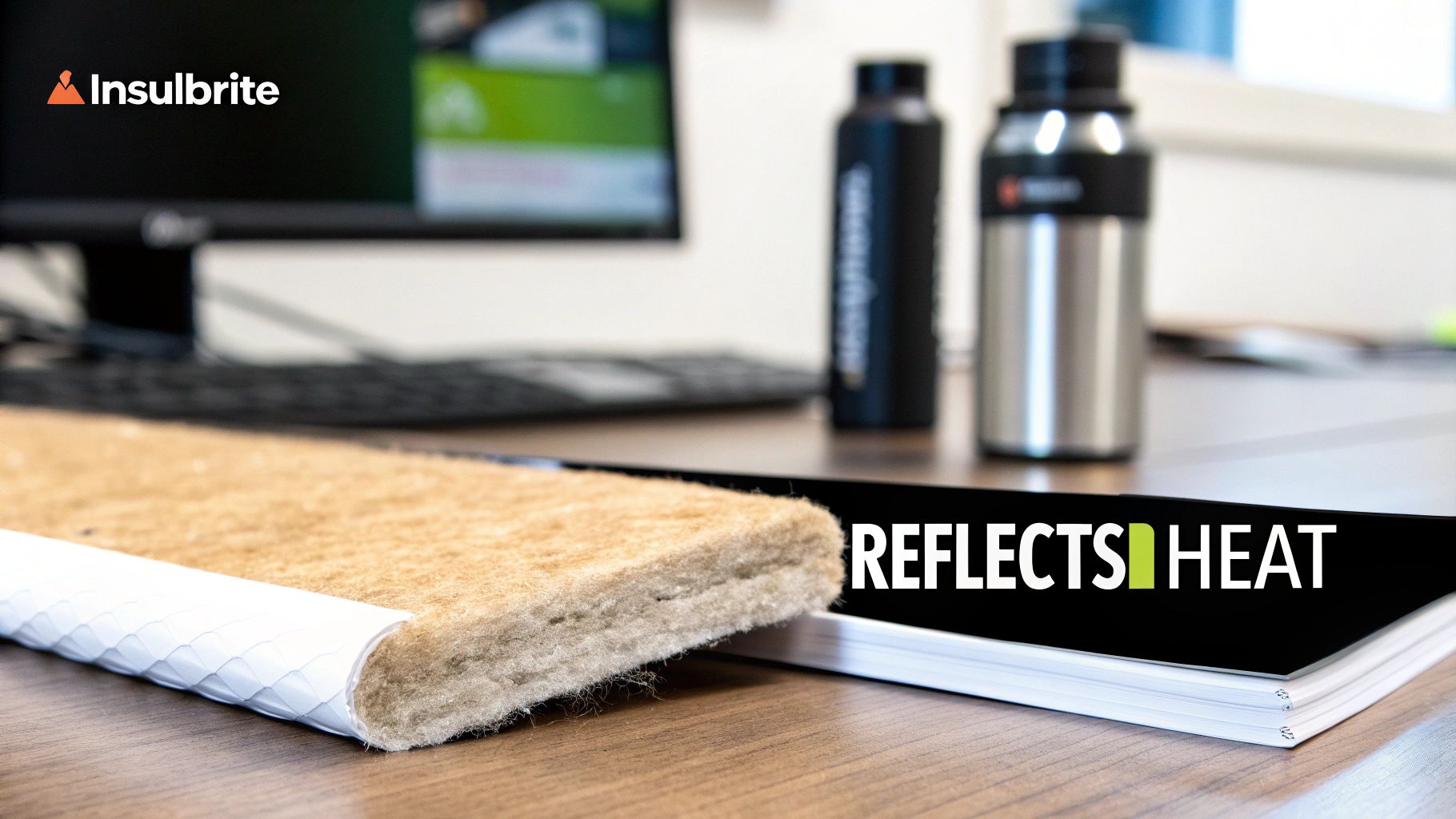
Think of Insulbrite like one of those high-tech emergency space blankets, but made soft and flexible for your sewing machine. Its magic isn’t about being thick or fluffy like traditional batting. Instead, its power comes from a clever, multi-layered construction designed to stop radiant heat in its tracks.
The real star of the show is a thin, reflective metallized polyester film tucked inside. When you grab a hot dish, the heat radiates out in invisible waves. That shiny layer acts like a mirror, bouncing the vast majority of that thermal energy right back at the dish instead of letting it pass through to your hand. It does the same thing for cold items, reflecting the cold back toward your food and keeping the ambient warmth out.
How It’s Different from Your Everyday Batting
Your standard cotton or polyester batting is more like a cozy wool sweater. It works by trapping air in its fibers, which slows down heat transfer. It’s a great insulator, but the heat will eventually soak through. Insulbrite adds a whole other level of defense by actively reflecting that energy away.
This is what sets Insulbrite apart and makes it perfect for certain jobs:
- Active Heat Reflection: It doesn't just slow heat down; it bounces it back.
- Moisture-Proof: The polyester fibers won't absorb water, which means no worries about mildew.
- Built to Last: It's needle-punched, locking all the fibers together so they won't shift or clump up, even after a trip through the wash.
Insulbrite's genius lies in its simplicity. It takes a sophisticated scientific concept—radiant heat reflection—and wraps it in a soft, easy-to-sew package that anyone can use.
From Industrial Tech to Your Sewing Room
This reflective technology isn't new; it's borrowed from much bigger industries. Insulbrite is really where home sewing meets thermal engineering. The same principles that make the metallized film work are used in large-scale radiant barriers in home construction, where reflective surfaces in attics and walls can dramatically reduce cooling costs.
Knowing how it works helps you pick the right tool for the job. You wouldn’t use it for a lightweight, breathable quilt, but for any project that demands serious thermal performance, it’s the undisputed champion. You can grab some versatile Insul-Bright insulating thermal lining for your next project, confident you know exactly how it’s going to work its magic.
Creative Project Ideas Using Insulbrite
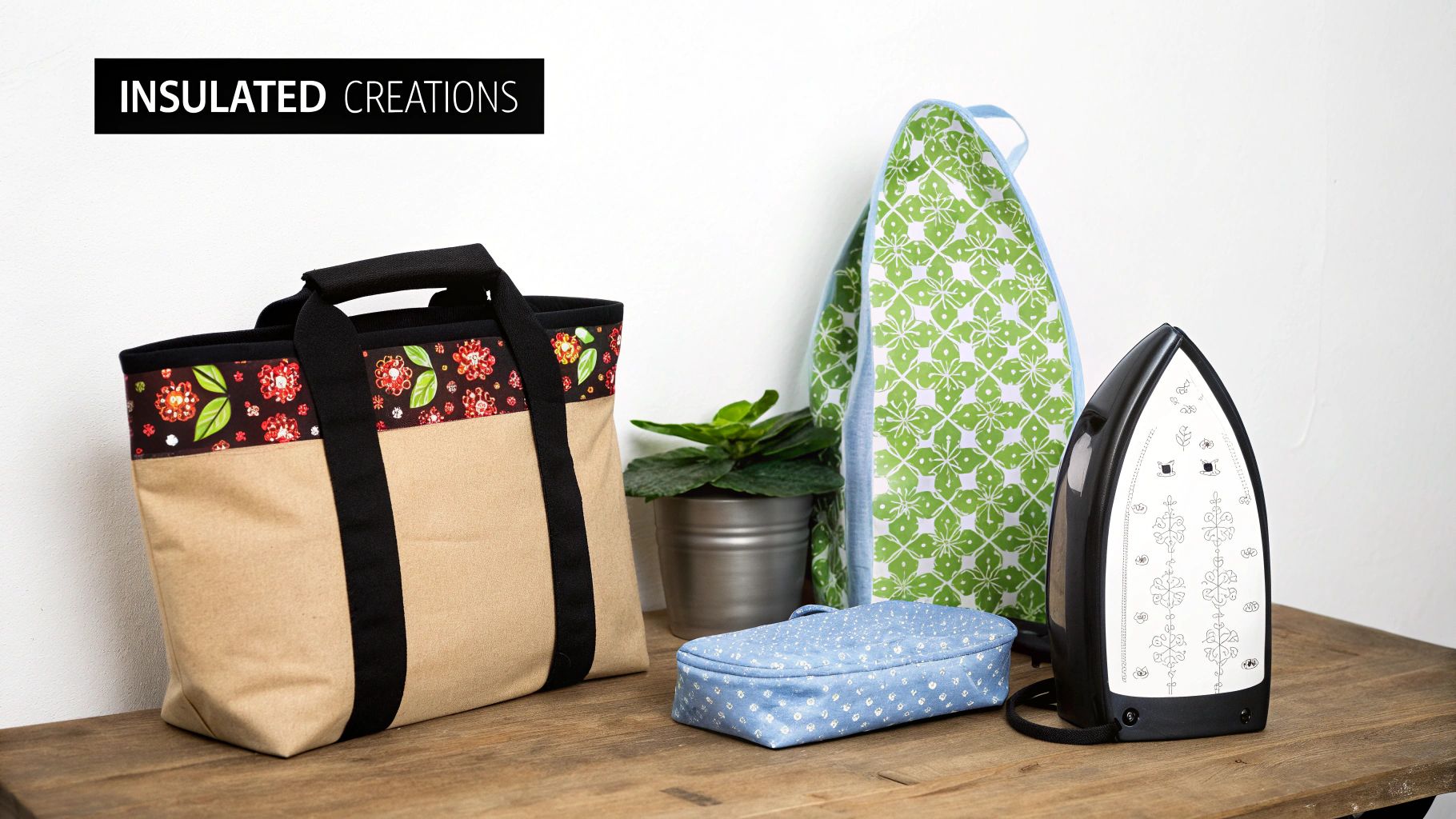
Sure, oven mitts and pot holders are the go-to projects for Insulbrite, and for good reason! But they really just scratch the surface of what this stuff can do. Its unique ability to reflect heat and cold opens up a whole world of possibilities, letting you turn everyday items into high-performance accessories for your home, kitchen, or even your Etsy shop.
Think of Insulbrite as the secret ingredient that adds serious function to your beautiful forms. It’s what makes your handmade creations not just lovely to look at, but incredibly useful.
Everyday Items Made Better
You’d be surprised how many common household items get a major upgrade with a layer of Insulbrite thermal batting. By building in its heat-reflecting magic, you can craft products that solve real-world problems—the kinds of things people will reach for again and again.
Here are a few ideas to get your wheels turning:
- Insulated Lunch Totes: Imagine a lunch bag that keeps food perfectly chilled until noon, without needing a clunky ice pack. The reflective layer bounces the cold air right back inside, keeping everything fresh.
- Stylish Tea Cozies: A well-made tea cozy is a thing of beauty, but one lined with Insulbrite is a game-changer. It can keep a pot of tea steaming hot through a long, lazy chat with a friend.
- Durable Ironing Board Covers: This is a brilliant one. The batting reflects the iron's heat back up into the garment, so you're essentially ironing both sides at once. It can seriously cut down your pressing time.
- Casserole Carriers: No more lukewarm dishes at potlucks! A carrier made with Insulbrite ensures your famous lasagna arrives just as hot and bubbly as when it left your oven.
This isn’t just a niche crafting trend, either. The global market for insulated products was valued at roughly USD 73.5 billion in 2023, and it's on the rise. People want smart, energy-efficient solutions, and handmade items that deliver are a perfect fit. You can read more about the insulated products market to see just how big this opportunity is.
Unconventional and Profitable Ideas
Ready to think outside the box? These next few projects show off Insulbrite’s true versatility and can really make your handmade business stand out from the crowd.
The most successful makers I know have found their sweet spot by combining gorgeous design with undeniable utility. Insulbrite lets you build that utility right into the fabric of your work.
Give these innovative projects a try:
- Insulated Window Coverings: This is genius. Create thermal-lined Roman shades or drapes. In the winter, they reflect heat back into the room, and in the summer, they reflect sunlight out, helping to lower those pesky energy bills.
- Grocery Shopping Totes: Sew a few large, sturdy totes with an Insulbrite lining. They’re perfect for keeping frozen foods solid and cold items chilled on the drive home from the supermarket.
- "Cool" Car Seat Liners: A simple, removable seat cover lined with Insulbrite can be a lifesaver in the summer, keeping car seats from getting scorching hot in the sun.
A quick pro-tip: for projects that will handle serious heat, like pot holders or casserole carriers, it’s always a good idea to pair Insulbrite with a layer of cotton batting. This adds extra protection and a bit more structure. To get the combination just right, check out our deep dive on the best batting for potholders.
How to Sew and Handle Insulbrite Like a Pro
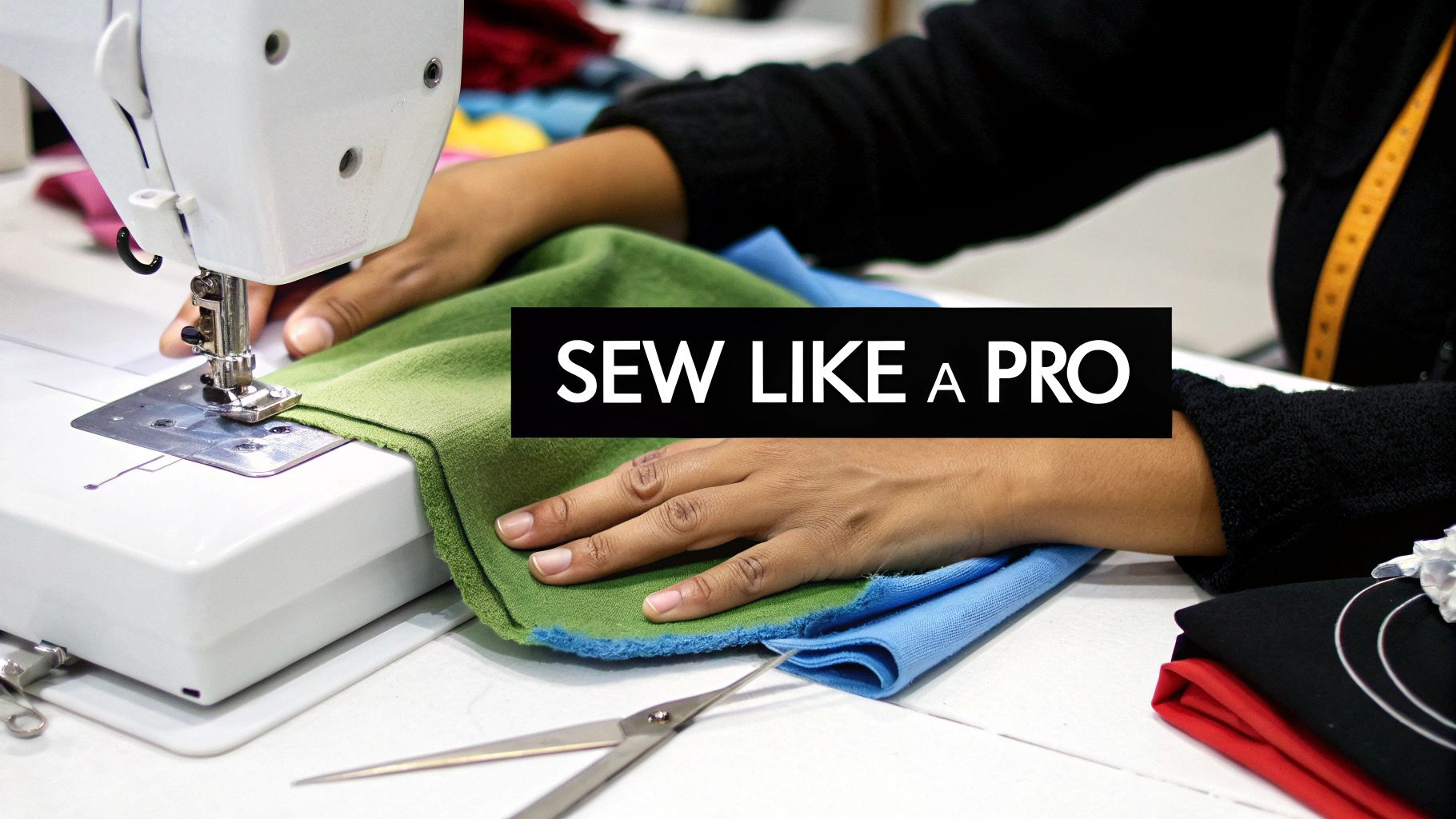
Working with Insulbrite thermal batting is a lot less intimidating than you might think. Honestly, a few insider tips can take your projects from looking homemade to totally professional. The trick is to understand its unique personality—from the crinkle it makes to the kind of needle it prefers—and use those quirks to your advantage.
The first step to a smooth-sailing project is grabbing the right tools. Because Insulbrite has that metallic film inside, your standard universal needle is going to get dull in a hurry. A dull needle means skipped stitches, snagged fabric, and a whole lot of frustration. Trust me, your sewing machine will thank you for making a better choice.
Essential Sewing Machine Setup
Before you even think about putting your foot on the pedal, a few quick tweaks to your machine will make a world of difference. Your goal is to get strong, even stitches that glide through all the layers without any annoying puckering or bunching.
- Needle Choice: A Microtex (or sharp) needle in a size 80/12 or 90/14 is the absolute best tool for the job. Its super-sharp point pierces the Mylar film cleanly instead of just punching a hole, which is what prevents snags and keeps your stitches looking perfect.
- Stitch Length: Go ahead and lengthen your stitch a bit, somewhere around 2.5 mm to 3.0 mm. This gives the machine a little more room to pull the thicker layers through evenly. It also means you're not perforating the material too much, which keeps it strong.
- Thread Selection: No need for anything fancy here. A good quality, all-purpose polyester or cotton-poly blend thread has all the strength you need to hold everything together without adding extra bulk.
With just those three simple adjustments, you're all set to sew Insulbrite without a hitch.
Tips for a Perfect Finish
Beyond your machine setup, a couple of handling tricks will ensure your projects not only look polished but perform exactly as they should. For instance, the pre-washing question comes up all the time.
Here's the simple answer: do not pre-wash Insulbrite. It's made of polyester fibers that have virtually no shrinkage, and washing it before it’s quilted into your project can make it stretch out of shape. Just sew it right out of the package and wash the finished item later.
For projects like oven mitts and hot pads where you need maximum heat protection, try layering. Place a piece of 100% cotton batting against the fabric that will touch the hot dish, then add your Insulbrite layer. This combo gives you a fantastic one-two punch of heat absorption from the cotton and heat reflection from the Insulbrite.
And finally, learn to love the crinkle! That subtle noise is just the sound of the metallic film doing its job. It's the signature sound of a project with serious thermal protection built right in.
A Few Critical Safety Rules for Using Insulbrite
When you're sewing something designed to handle the heat, safety isn't just a feature—it's everything. Let's talk about how to use Insulbrite thermal batting correctly, so you can create projects that are not only effective but, most importantly, completely safe for you and the people you care about.
Following a few simple, common-sense rules will make sure your oven mitts, potholders, and casserole cozies perform beautifully and safely for years to come.
The first thing to burn into your memory is that Insulbrite is heat-resistant, not heat-proof. This is a huge distinction. While it's fantastic at reflecting radiant heat away from your hands, it's not meant to be a standalone shield against a hot pan.
Think of it as part of a team. It must always be sandwiched between at least two layers of fabric, preferably 100% cotton, to work the way it was designed.
The Most Important Rule: No Microwaves, Ever
This is the one safety rule that has absolutely no wiggle room. Because of its metallic film, Insulbrite is a serious fire hazard in a microwave. The metal will arc and throw sparks, which can easily set the surrounding fabric on fire.
Never, ever, under any circumstances, should anything containing Insulbrite go into a microwave. It’s why you see specific products like Wrap-N-Zap for microwave bowl cozies or potato bags—that batting is made from 100% cotton and is designed for that job.
WARNING: Do NOT use Insulbrite thermal batting in a microwave. The metallic film will create electrical arcs and can cause a fire. For microwaveable projects, use a 100% cotton, microwave-safe batting.
Proper Care for Lasting Safety
Taking good care of your finished projects is key to keeping them safe and effective. The good news is that Insulbrite is pretty tough and can handle a trip through the washer and dryer, which is a lifesaver for oven mitts and casserole carriers that inevitably get a little messy.
Just stick to these simple care tips:
- Washing: Toss it in the machine on a gentle cycle with cold or warm water.
- Drying: You can tumble dry on a low heat setting, or just let it air dry.
- Ironing: Whatever you do, don't let a hot iron touch the batting directly. When you press your finished project, make sure the Insulbrite is safely tucked away between its fabric layers.
By keeping these guidelines in mind, you can confidently sew all sorts of insulated goodies that are both incredibly handy and perfectly safe.
Why Buying Insulbrite by the Roll Is a Smart Move
If you're a serious crafter or run a small business, there comes a point when buying fabric by the yard just doesn't make sense anymore. Making the leap to buying by the roll is a real game-changer—it’s that moment your craft shifts from a fun hobby to a smooth, profitable business. Grabbing a full roll of Insulbrite thermal batting isn’t just about stocking up; it's a smart investment in your future.
The first thing you'll notice is the money you save. The price per yard drops dramatically when you commit to a 30-yard roll, which immediately pumps up the profit on every single oven mitt, casserole carrier, and insulated lunch bag you make. That extra cash can go right back into your business or simply make your hard work that much more rewarding.
Streamline Your Production and Stay Ready
Besides the savings, having a full roll means you’re always ready to go. There’s nothing more frustrating than landing a big custom order or getting a sudden burst of creative energy, only to realize you're out of your most important material. A roll of Insulbrite in your studio means you never have to hit pause.
This keeps your production flowing and your customers happy. Plus, when you work from one continuous roll, you get a consistent quality and feel across all your products. That kind of reliability is exactly what builds a stellar reputation.
Buying your supplies in bulk is a classic sign of a business that's ready to grow. It shows you're shifting from just reacting to orders to planning ahead, setting yourself up to scale your craft with confidence.
Cost Analysis Small Cut vs By The Roll
To really see the difference, let’s look at the numbers. The cost difference between buying a few yards at a time versus investing in a full roll is often surprising. For anyone making insulated products regularly, the math speaks for itself.
| Purchase Method | Typical Price Per Yard (USD) | Total Cost for 30 Yards (USD) | Potential Savings |
|---|---|---|---|
| By the Yard | $10.50 | $315.00 | - |
| By the Roll | $7.50 | $225.00 | $90.00 |
This $90.00 savings on a single roll is significant. It's money that can be reinvested into other materials, marketing, or simply translate to a 30% boost in your profit margin on batting costs. It's a clear win for any business looking to operate more efficiently.
The demand for well-made insulated goods is definitely on the rise, as more people look for energy-saving and long-lasting products for their homes. Insulated batting has gone from a specialty item to a must-have for countless creators. In fact, you can see just how big this market is getting by checking out the global rise of insulation materials.
Ultimately, investing in a roll smooths out your entire creative process, cuts down on waste from small cuts, and makes your business stronger and more profitable. To dive deeper into the benefits and see more numbers, take a look at our guide on purchasing wholesale quilt batting rolls.
Comparing Insulbrite to Other Batting Types
Picking the right batting is a lot like choosing the right tool for a job. You wouldn't use a hammer to turn a screw, right? In the same way, you wouldn't use Insulbrite thermal batting for a soft, breathable bed quilt. Knowing what makes each type of batting special is the key to making sure your projects not only look amazing but also do exactly what you need them to do.
Insulbrite is a true specialist, engineered from the ground up for one thing: thermal reflection. On the other hand, traditional battings like cotton, wool, or popular blends are the generalists of the sewing world—they’re all about warmth, beautiful drape, and comfort. The biggest difference between them comes down to breathability. Natural fibers like cotton and wool let moisture vapor pass right through, which is absolutely essential for things like quilts and clothing to keep you from feeling clammy.
Insulbrite, with its metallic film core, is intentionally non-breathable. That’s its whole purpose. It creates a solid barrier to stop heat or cold in its tracks.
Choosing the Right Material for Your Project
So, how do you decide? It really boils down to what you’re making.
-
100% Cotton Batting: This is the timeless choice for classic quilts. It’s wonderfully soft, breathes naturally, and gives you that lovely, slightly crinkled look after washing that we all love. It's the go-to for bed quilts, wall hangings, and runners where you aren't focused on temperature control.
-
80/20 Cotton-Poly Blends: The dependable workhorse of the batting world. You get the soft feel of cotton plus the added stability and loft of polyester. It's a favorite for longarm quilters and an excellent all-around choice for projects that need to stand up to frequent use and washing.
-
Wool Batting: The luxury pick. Wool provides incredible warmth without the weight, and it resists creasing, which gives quilts a gorgeous, lofty drape. It insulates beautifully while still being breathable, making it perfect for the coziest winter quilts.
Insulbrite shines where the others can't—in projects that demand serious thermal control. It's the only real choice for a casserole carrier or an insulated lunch bag. For a baby quilt, however, traditional cotton is always the safer, more comfortable option.
Choosing Your Batting Insulbrite vs Traditional Options
To make it even clearer, here’s a quick feature-by-feature comparison to help you decide which batting is best suited for your specific quilting or sewing project.
| Feature | Insulbrite Thermal Batting | 100% Cotton Batting | 80/20 Cotton-Poly Blend | Wool Batting |
|---|---|---|---|---|
| Primary Use | Thermal insulation | Traditional quilting | All-purpose quilting | Warmth & luxury quilts |
| Breathability | None (non-breathable) | High | Moderate to High | Very High |
| Drape | Stiff, holds shape | Soft, drapes well | Medium, good body | Lofty, excellent drape |
| Loft | Low | Low to Medium | Medium to High | High |
| Shrinkage | None | 3-5% (creates crinkle) | Low (1-3%) | Minimal |
| Best For | Oven mitts, lunch bags | Bed quilts, wall art | Everyday quilts, longarming | Heirlooms, winter quilts |
Ultimately, having a roll of Insulbrite on hand alongside your favorite traditional battings means you’re prepared for any creative project that comes your way.
This handy visual shows how stocking up can directly benefit your business or serious hobby.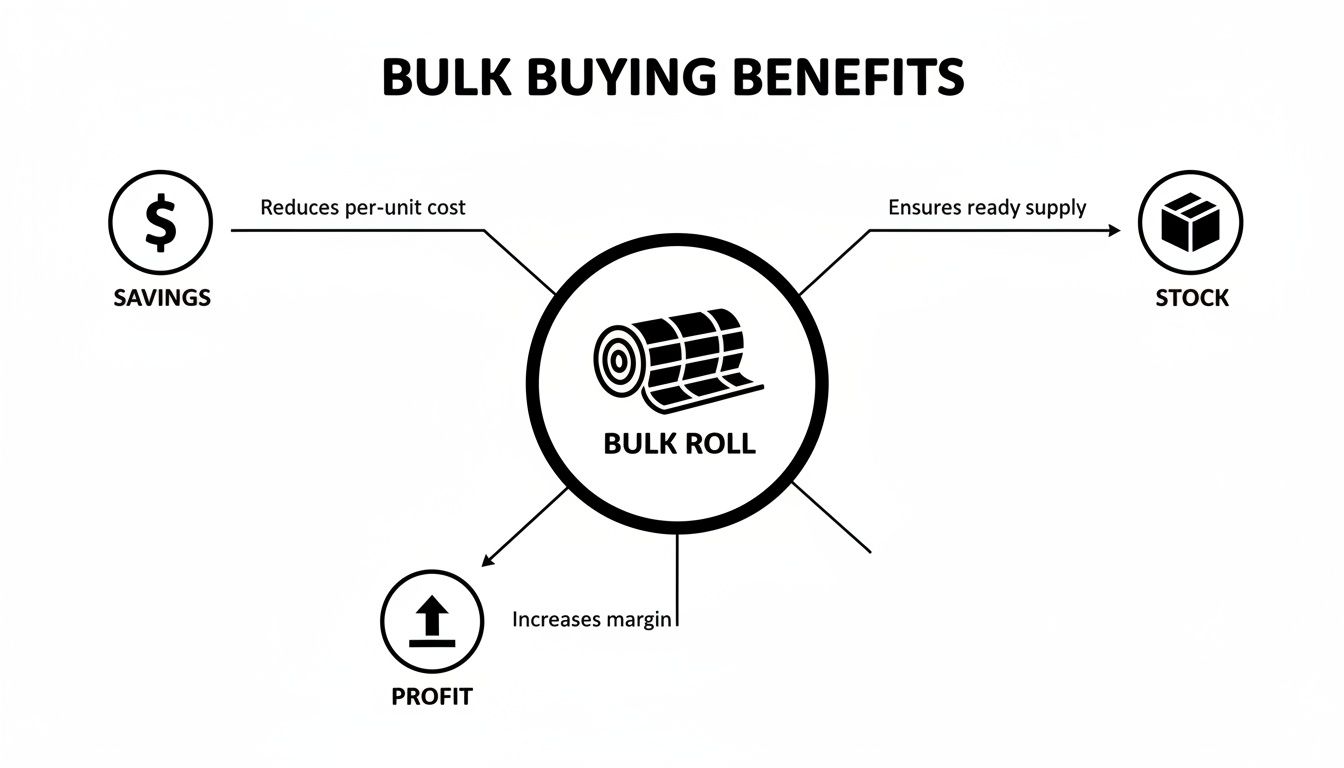
Buying by the roll isn't just about saving money; it’s about having what you need, when you need it. For an even deeper dive into how different materials compare, check out our detailed quilt batting comparison chart. It’s a great resource for matching the perfect batting to your next big idea.
Your Insulbrite Questions, Answered
Once you get the hang of a new material, a few specific "what if" questions always come to mind. That’s especially true for a specialty product like Insulbrite thermal batting. Let's clear up the most common curiosities we hear from fellow makers so you can feel totally confident before you start cutting.
Getting these details right is the secret to making sure your insulated projects look and perform exactly as they should.
Can I Use Insulbrite in a Bed Quilt?
You could, but you really, really shouldn't. It's strongly discouraged for any kind of bedding, and for a good reason. Insulbrite is designed to be a non-breathable barrier that reflects heat. In a bed quilt, that means it would trap all your body heat and moisture, leading to a hot, sticky, and downright uncomfortable night's sleep.
For bed quilts, you always want a breathable material that helps regulate temperature naturally, keeping you cozy without making you clammy.
- Better Choices for Bedding: Stick with the classics like 100% cotton, wool, or a soft Hobbs 80/20 blend. They offer far better comfort and breathability for a good night's rest.
Does the Shiny Side Have to Face the Hot (or Cold) Thing?
This is easily the most-asked question, and the answer is refreshingly simple: nope, it doesn't matter which way it faces. The manufacturer, The Warm Company, confirms that the reflective magic happens inside the material itself. The thermal properties work the same no matter which direction the metallic side is pointing.
That said, most of us prefer to place the shiny side facing inward, away from our main fabric. This is purely a personal preference to avoid any metallic shimmer showing through light-colored fabrics. It has zero impact on how well it works.
Is Insulbrite a Pain to Quilt on a Longarm?
Not in the slightest! Plenty of longarm quilters use Insulbrite all the time with great results. Because it's a needle-punched material, it’s surprisingly stable and doesn't tend to shift or bunch up on the frame. It handles a lot like a standard low-loft polyester batting.
A Pro Tip for Longarmers: Kick things off with a fresh, sharp needle and maybe lengthen your stitch just a bit. This simple trick helps you get beautiful, clean stitches when you're working on bigger projects like insulated table runners or a set of placemats.
Can I Iron Directly on Insulbrite?
Please don't! You should never touch a hot iron directly to an exposed piece of Insulbrite. The metallic film layered inside will melt under that direct heat, ruining the batting and potentially gumming up the bottom of your iron.
Always make sure your Insulbrite is tucked safely between its fabric layers before you press your project.
Ready to put thermal reflection to work in your next creation? Quilt Batting has the high-quality Insulbrite you're looking for, whether you need just a yard or a full cost-saving roll.