

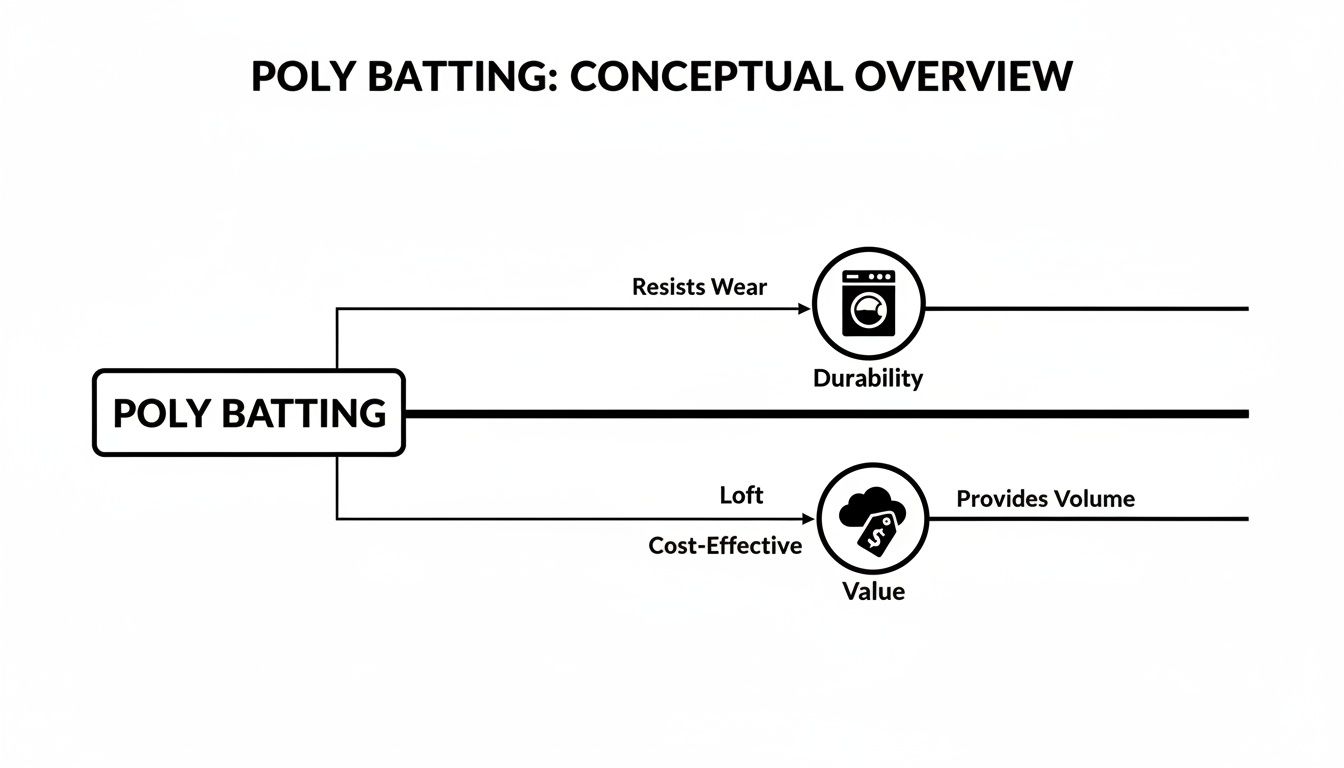
For countless quilters, poly quilt batting is the unsung hero of quilts meant for real life. It’s the durable, lightweight, and budget-friendly filling that creates beautiful stitch definition and holds its shape through years of snuggling, fort-building, and trips to the laundry room.
Made from polyester fibers—and often blended with cotton—it's the go-to choice for everything from everyday bed quilts to well-loved decorative pieces.
What Is Poly Quilt Batting and Why Is It a Quilter's Favorite?
Picture your perfect quilt. It’s cozy but not heavy, soft enough for a nap, and tough enough to look great after countless washes. For generations, quilters have turned to polyester batting to hit that sweet spot. It's the reliable foundation for quilts that are meant to be used, not just admired.
Think of batting as the soul of your quilt sandwich. It's the hidden middle layer that gives your quilt warmth, dimension, and that lovely, huggable feel. While natural fibers like cotton and wool have their own charms, polyester brings a set of practical, modern benefits to the table. Its synthetic fibers naturally resist mold and mildew, which is a huge plus for quilts stored in humid climates or basements.
The Best of Both Worlds: The 80/20 Blend
One of the most popular options you'll see isn't actually 100% polyester. It’s the legendary 80/20 blend, a powerhouse combination of 80% cotton and 20% polyester. This hybrid has become a studio staple for a reason—it truly offers the best of both worlds.
So, why do quilters rave about this specific blend? The cotton brings that soft, natural hand-feel and creates the gentle, crinkly texture that gives a finished quilt that classic heirloom look. At the same time, the polyester fibers add serious strength, reduce shrinkage, and provide the stability needed to stand up to the high tension of a longarm quilting machine without stretching or tearing.
If you want to explore how different batting materials stack up, you can learn more about what quilt batting is and see the full range of options.
This blend is the workhorse for quilters who don't want to compromise. You get the beautiful drape and aesthetic of cotton with the rock-solid durability and ease of use that polyester provides.
Key Advantages for Modern Quilting
The love for poly batting goes way beyond its composition. It's really about what those fibers empower you to create. Polyester provides a consistent loft (the batting’s thickness), which makes your quilting stitches pop with gorgeous definition. Whether you're doing intricate free-motion designs or clean straight lines, the batting supports the thread, creating a rich texture you can see and feel.
Here are a few of the core reasons it remains a favorite in quilting circles:
- Affordability: Let's be honest—quilting can be an investment. Polyester is generally more budget-friendly than natural fibers like wool or 100% cotton, making it possible to tackle that king-sized project without breaking the bank.
- Durability: This stuff is tough. It holds up exceptionally well to repeated washing and drying, maintaining its shape and loft over time without bunching up or breaking down.
- Low Shrinkage: Unlike 100% cotton batting, which can shrink up to 5%, polyester and 80/20 blends have very little shrinkage. This means the size you finish with is the size you keep.
- Lightweight Warmth: Poly batting provides fantastic insulation without being heavy or bulky. The result is a quilt that’s cozy and comfortable enough to use all year long.
Understanding The Anatomy Of Your Batting
Choosing the right batting can feel like you're trying to learn a whole new language. You hear words like loft, scrim, and bonding, and it's easy to get overwhelmed. But don't worry—these concepts are actually pretty simple once you break them down.
Think of them as the ingredients in your quilt's "recipe." Each one adds a specific quality, and once you know what they do, you'll go from guessing which batting to buy to confidently choosing the perfect one for every single project.
Decoding Loft: The Secret To Your Quilt's Profile
The first thing you’ll probably notice about any batting is its loft. That’s just a quilter's way of saying its thickness or puffiness. This one factor makes a huge difference in how your finished quilt looks and feels.
Let's make it simple.
- Low Loft: This batting is thin, almost flat. It creates a smooth, modern look where your piecing and fabric choices really shine. It’s my go-to for things like table runners, placemats, and wall hangings—anything you want to lay nice and flat.
- High Loft: This is your big, fluffy, cloud-like batting. It gives you a quilt with real dimension and that classic, puffy, comforter feel. The extra height makes your quilting stitches pop, creating beautiful texture. This is what you want for a super-cozy bed quilt or a tied comforter.
The loft doesn't just change the look; it changes the entire personality of the quilt. Low loft whispers elegance and precision, while high loft shouts comfort and coziness.
The Role Of Scrim: Your Hidden Stabilizer
Ever worked with a batting that felt super stable, while another felt a little flimsy and stretchy? The secret ingredient is often a scrim.
A scrim is just a very thin, lightweight grid that’s needle-punched into the batting. Think of it like the rebar inside concrete—you can't see it, but it adds a ton of strength and stability. This little layer keeps the fibers from shifting, stretching, or pulling apart while you're quilting.
That added stability is a game-changer. For an even deeper dive, you can learn more about what scrim is in batting and why it's a longarmer's best friend. It means you can quilt your lines much farther apart—sometimes up to 8-10 inches—and you won’t have to worry about the batting bunching up in the wash.
How Batting Is Made: Needle-Punching vs. Thermal Bonding
So, how are all those fibers held together? It usually comes down to one of two methods, and each gives the batting a different feel.
Needle-punching is a mechanical process where thousands of barbed needles punch through the fibers over and over again, literally tangling them together. This creates a dense, stable batting. If a batting has a scrim, it was almost certainly needle-punched to lock it in place.
Thermal bonding, on the other hand, uses heat to lightly melt the fibers so they fuse together. This results in a much lighter, airier batting that usually has a higher loft and drapes beautifully.
Knowing the difference helps you predict how the batting will handle under your needle, giving you total creative control.
This quick-reference table breaks down the key features of poly batting, helping you match the right characteristics to your project’s needs.
Batting Characteristics At A Glance
| Batting Feature | What It Means for Your Quilt | Ideal Project Type | Key Consideration |
|---|---|---|---|
| Low Loft | Creates a flat, modern profile with less puffiness. | Wall hangings, placemats, table runners, modern quilts. | Emphasizes piecing and fabric over quilting texture. |
| High Loft | Produces a thick, puffy quilt with a traditional, cozy feel. | Bed quilts, tied comforters, projects needing warmth. | Defines quilting stitches and adds a plush texture. |
| Scrim | Adds strength and stability, preventing stretching or shifting. | Large quilts, longarm quilting, items needing durability. | Allows for wider quilting distances (8-10 inches). |
| No Scrim | Offers a softer drape and is easier to needle by hand. | Hand quilting, small projects, antique-style quilts. | Requires closer quilting stitches to prevent bunching. |
| Needle-Punched | Denser and more stable, with a lower loft and less drape. | Utility quilts, bags, projects requiring firm structure. | Can feel a bit stiffer than other types. |
| Thermally Bonded | Lightweight and airy with a softer drape and higher loft. | Garments, throw quilts, projects where drape is key. | Not as stable as needle-punched options. |
By understanding these few elements—loft, scrim, and construction—you can walk into any quilt shop or browse online with the confidence of a seasoned pro, ready to pick the perfect foundation for your next masterpiece.
Why the 80/20 Cotton-Poly Blend Is So Popular
Step into any quilt shop or chat with a group of seasoned quilters, and it won’t take long before you hear someone singing the praises of the 80/20 blend. It’s more than just another option on the batting aisle; for a huge number of quilters, it's the undisputed champion. It’s the go-to batting that just works, beautifully bridging the gap between old-fashioned comfort and modern-day performance.
What if you could have the soft, gentle drape of a vintage cotton quilt but with the resilience to stand up to real life? That’s exactly what the classic 80% cotton and 20% polyester blend delivers. This is the batting that says you don’t have to choose between heirloom charm and everyday durability.
The Best of Both Worlds in One Batting
The magic of 80/20 batting is all in its smart composition. The hefty cotton portion gives you that natural breathability and soft hand everyone loves. It’s also what creates that subtle, puckered texture after the first wash—the hallmark of a classic, well-loved quilt.
That small but mighty 20% of polyester, on the other hand, is the secret weapon. It provides stability, drastically cutting down on the shrinkage you’d see with 100% cotton. That little bit of poly adds just enough strength to handle the pull of a longarm machine without stretching, tearing, or causing headaches. The result is a smooth, professional finish, every time.
This blend is a quilter’s secret advantage. You get the classic look of cotton with the no-fuss, practical benefits of polyester. That makes it a reliable workhorse for everything from a cozy couch quilt to a client’s custom order.
The industry has certainly taken notice. The demand for reliable, user-friendly materials like this is a big reason why the global quilt batting market was valued at around $3.03 billion and is expected to hit $4.19 billion by 2032. Polyester’s affordability and consistent performance are major drivers of this growth, making blends like 80/20 a staple for hobbyists and professionals alike. If you're curious, you can explore more data on these quilting market trends and see just how much these preferences are shaping the industry.
Why Quilters Trust This Blend for Their Projects
The love for the 80/20 blend runs deeper than just how it feels; it’s all about getting reliable, consistent results. It's incredibly forgiving, making it a fantastic choice whether you're a longarm pro or quilting your very first project on a domestic machine.
Here are a few of the top reasons it’s earned such a stellar reputation:
- Exceptional Stitch Definition: The batting has just enough loft to make your quilting stitches pop. You get gorgeous texture without the puffiness that can swallow up your design.
- Minimal Shrinkage: You get that cozy, crinkled look after washing, but without the dramatic shrinkage of pure cotton. Your quilt stays true to size.
- Amazing Versatility: This is a true all-rounder. It’s equally great for machine quilting, hand quilting, or even tying. Its medium weight and beautiful drape work for bed quilts, wall art, and quilted jackets.
- Long-Lasting Durability: The polyester fibers act like rebar for the cotton, creating a strong, stable batting that holds up beautifully to frequent use and washing.
It’s this unique combination that makes 80/20 such a smart and dependable choice. For a deeper dive into how this blend stacks up against the alternatives, take a look at our guide on cotton vs polyester batting for more insights. This blend really is the perfect partnership of fibers, giving you confidence that the quilt you pour your heart into will be loved for years to come.
Matching the Right Poly Batting to Your Quilt Project
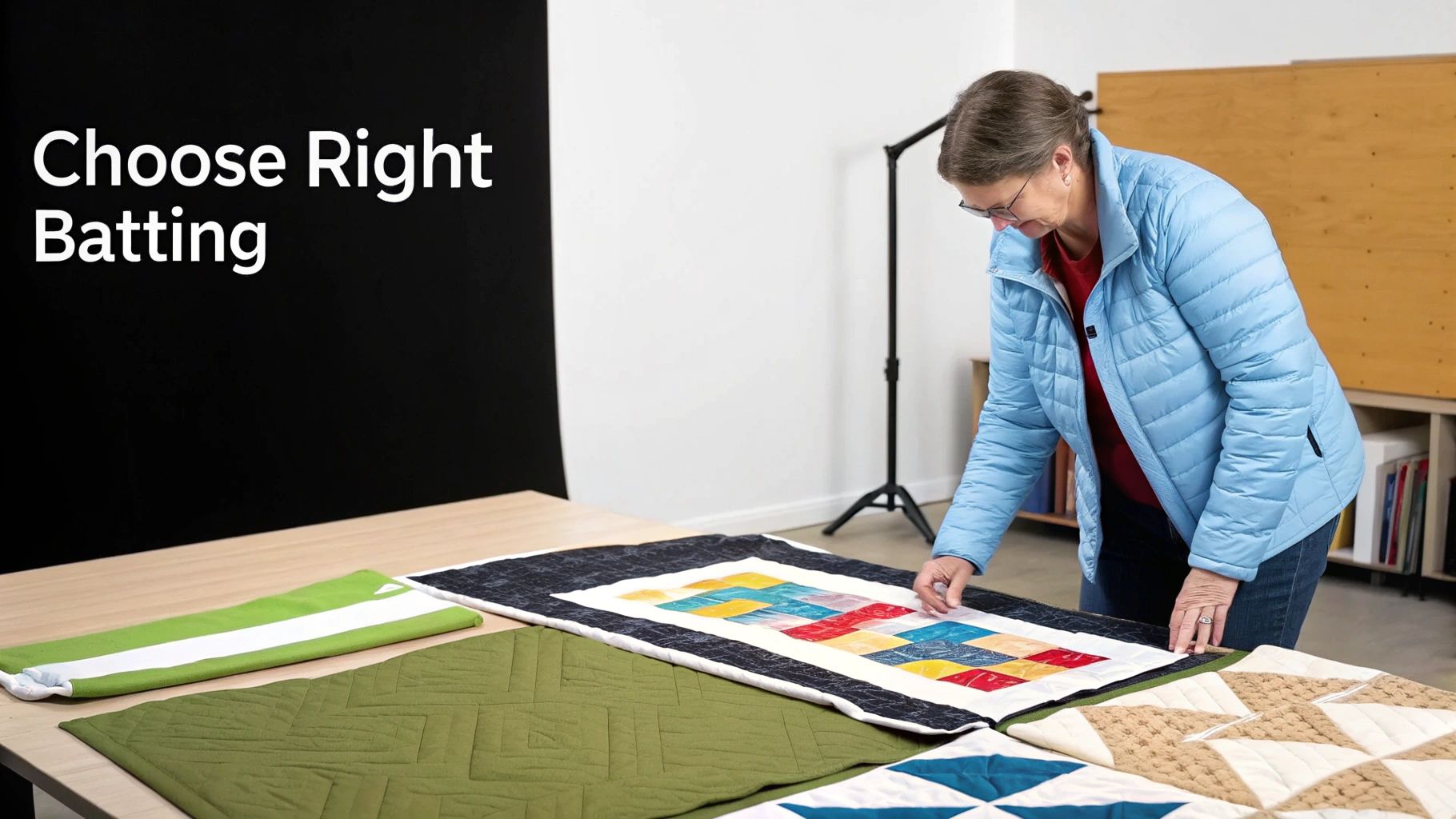
Knowing the specs of poly quilt batting is a great start, but the real magic happens when you pair the perfect batting with the right project. This is where all that technical stuff turns into a real quilt with the exact look, feel, and function you’ve been dreaming of. The batting you choose will define everything from how the quilt drapes to how well it holds up over time.
Let’s get practical. We’ll move beyond the general rules and look at specific, real-world projects. By matching the batting's personality to your quilt's purpose, you can nail the result every time—whether it’s destined for a gallery wall or a toddler's messy bed.
For Everyday Bed and Throw Quilts
Think about a quilt that’s meant for serious daily use—the kind that gets snuggled under during movie nights, dragged around the house, and tossed in the wash on a regular basis. For a quilt like that, durability is everything. You need a batting that can handle real life without bunching up or falling apart after a few cycles in the machine.
This is the perfect job for a medium-loft 80/20 cotton-poly blend. The 80% cotton brings the softness and breathability we all love, while that 20% shot of polyester gives it a backbone of stability and strength. It’s the best of both worlds, creating a cozy, resilient quilt with just enough puff to make your stitches pop.
For Modern Wall Hangings and Table Runners
Now, let’s switch gears to projects made for display. For wall hangings, table runners, or placemats, the goal is totally different. Here, you’re aiming for a flat, crisp finish that lets your beautiful piecing and fabric choices take center stage. A puffy, high-loft batting would just get in the way, distorting those clean lines and preventing the piece from hanging straight.
This is where a low-loft 100% polyester batting truly shines. Its thin profile guarantees the quilt will lay perfectly flat against a wall or table. Plus, the natural stability of polyester means it won’t sag over time, keeping your textile art looking sharp for years to come.
For Quilted Garments and Wearables
Making a quilted jacket or a chic vest? The number one thing to consider is drape. The batting has to be flexible enough to move with the body without making you feel like you’re wearing a cardboard box. If it’s too dense, the garment will be stiff and rigid; too lofty, and you’ll add bulk you didn’t ask for.
A thermally bonded polyester batting without a scrim is a fantastic choice for wearables. It’s exceptionally lightweight and soft, giving you warmth without the weight. It conforms beautifully to the body, ensuring your finished piece is as comfortable as it is stylish.
Pro Tip: Don't forget to match your batting color to your fabric! Using a white batting under dark fabrics can cause "bearding"—those annoying little white fibers that poke through the top. If you're working with dark or black fabrics, grabbing a black poly quilt batting is a simple pro move that keeps your work looking clean and pristine.
Special Considerations for Longarm Quilting
Anyone who uses a longarm machine knows the serious tension it puts on a quilt sandwich. All that pulling and stretching can easily distort a flimsy batting, leading to frustrating puckers, tucks, and an uneven finish. It’s a quilter’s nightmare.
For longarmers, a poly quilt batting with a scrim isn’t just a nice-to-have; it’s a must. That thin internal mesh acts as a stabilizer, keeping the batting from stretching or tearing under pressure. It provides the strength you need for flawless, high-speed quilting and lets you space your quilting lines farther apart without worrying about the batting shifting around later.
To get a clearer picture of all your options, you might find this handy quilt batting comparison chart useful. It breaks down different materials and what they do best. At the end of the day, choosing the right foundation sets your project up for success from the very first stitch.
How Poly Batting Compares to Other Types
It’s always helpful to see how polyester and poly-blends stack up against the other major players in the batting world. Each type has its own unique strengths, and knowing them helps you make an informed choice for every single project.
| Batting Type | Primary Advantage | Best for These Projects | Main Drawback |
|---|---|---|---|
| Polyester/Poly-Blend | Durability & Loft | Everyday quilts, wall hangings, puffy baby quilts, longarm quilting (with scrim) | Less breathable than natural fibers; can beard if not matched to fabric color. |
| 100% Cotton | Softness & Natural Feel | Traditional quilts, lightweight summer throws, projects needing a flat, crinkled look. | Can shrink (creating a "puckered" look); can be heavy when wet. |
| Wool | Warmth & Loft | Cold-weather quilts, show quilts; has incredible stitch definition and resists creases. | Higher cost; requires more careful washing to prevent shrinking/felting. |
| Fusible Batting | Ease of Basting | Small projects like wall hangings, table runners, and bags where pinning is difficult. | Can feel stiff if over-pressed; may not be ideal for soft, drapey bed quilts. |
Ultimately, there's no single "best" batting—only the best batting for the quilt you have in mind. Having a little bit of each on hand means you're always ready for whatever creative idea strikes next.
A Few Tricks for Quilting With Poly Batting
Working with poly batting is a fantastic experience once you get the hang of its unique personality. It's not quite like cotton, and that's a good thing! It offers some great shortcuts and creative freedom, but you need to handle it a bit differently. These are my go-to tips for making the process seamless, from prep to the final stitch.
One of the biggest perks? You can almost always skip pre-washing. Seriously. Unlike 100% cotton that can shrink up to 5%, polyester and 80/20 blends are incredibly stable. This means your quilt top won't suddenly look baggy after the first wash, saving you a whole lot of time and effort upfront.
But what if you love that classic, crinkly "lived-in" look of a vintage quilt? Easy. Just wash the entire quilt after it's fully quilted and bound. The cotton in your fabric (and in the blend) will shrink just enough to give you that gorgeous texture without any extra work beforehand.
Getting Your Quilt Sandwich Just Right
When your batting arrives folded or gets wrinkled in your stash, your first instinct might be to blast it with a hot iron. Stop right there! High heat is the enemy of polyester fibers—it can melt them, leaving you with a stiff, damaged mess and a gunked-up iron.
Here’s the safe way to smooth things out:
- Go Low: Set your iron to its lowest heat setting, usually labeled for synthetics or silk.
- Use a Barrier: Never let the iron touch the batting directly. A pressing cloth (a simple scrap of cotton fabric works perfectly) is non-negotiable.
- Press, Don’t Iron: Gently press the batting through the cloth with light, continuous movements. A few quick passes should be enough to release those wrinkles.
With your batting smooth and ready, it's time to baste. Polyester can feel a bit slicker than cotton, so a solid baste is your best friend for preventing layers from shifting around while you quilt.
Basting is your insurance policy against puckers and tucks. A few extra minutes spent securing your layers will save you hours of frustration and stitch-ripping later on.
Both pin basting and temporary spray adhesives work beautifully. If you're a pinner, you might want to place them a little closer together than you normally would. If you prefer spray basting, just be sure to work in a well-ventilated area and follow the can’s instructions for a secure (but repositionable) bond.
Quilting Distance and Long-Term Love
One of the best things about using poly batting, especially a type with a scrim, is the incredible freedom it gives you. You can often space your quilting lines as far apart as 8 to 10 inches without ever worrying about the batting bunching up or separating inside the quilt. This makes it perfect for modern designs with lots of open, negative space.
Always double-check the manufacturer's packaging for their specific recommendation, but get ready to enjoy the design flexibility.
Once your masterpiece is complete, caring for it is a breeze. Most polyester and poly-blend quilts can be tossed in the washing machine on a gentle cycle with cool water and a mild detergent. Tumble dry on low, and you're good to go. Because polyester dries quickly and resists wrinkles, your quilt will come out of the dryer looking fresh, lofty, and ready for another cuddle—the perfect choice for well-loved items like baby quilts and everyday throws.
The Smart Way to Buy Batting By the Roll
If you’ve been quilting for a while, you know the drill. You’re in the zone, piecing together a beautiful top, and then it hits you: you’re out of batting. Another trip to the craft store. For any serious quilter or small business owner, there comes a point where buying those pre-cut batting packages just stops making sense.
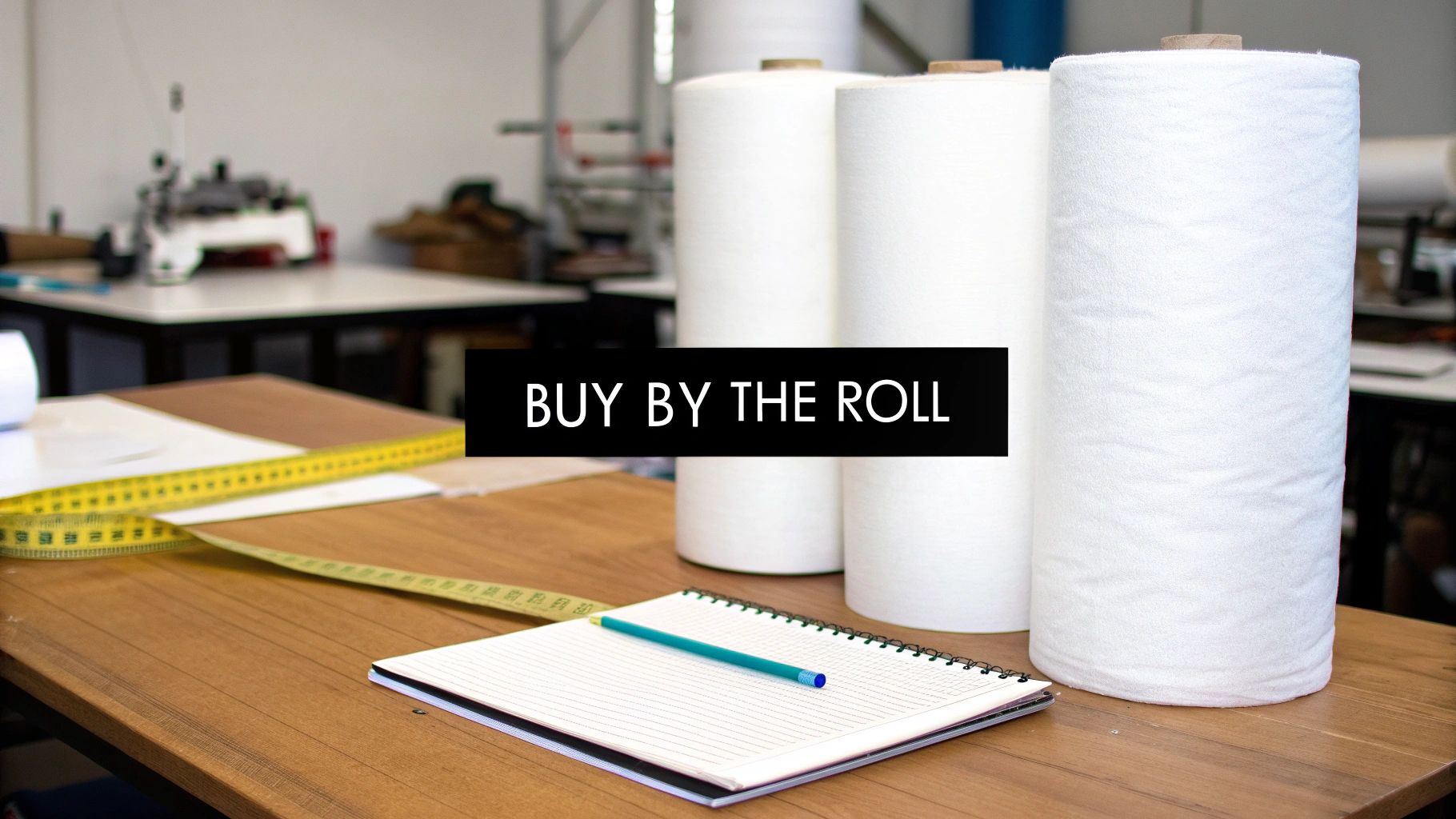
Graduating to buying your favorite poly quilt batting by the roll is a real turning point. It’s less of an expense and more of a strategic investment in your craft, shifting how you manage your projects and your time. Imagine just walking over to your roll, cutting exactly what you need, and getting right back to creating. No more emergency supply runs. No more piecing together awkward scraps for a king-sized quilt.
Unlocking Cost Savings and Efficiency
Let's talk numbers first. The most obvious win when you buy by the roll is the savings. The price per yard drops—a lot—when you commit to a full 30- or 40-yard roll. If you sell your quilts, that difference goes straight to your bottom line. If you're a hobbyist, it means you can make more quilts for your money. It's a simple, smart financial move.
But the real magic is in the efficiency. Having a big roll of batting ready to go in your studio smooths out your entire quilting process.
- Less Waste, More Quilt: You can cut the perfect custom length for any project, from a little wall hanging to a massive bed quilt. A single continuous piece means you drastically reduce those odd-shaped leftovers that pile up in a bin.
- Rock-Solid Consistency: When you work from one roll, you know every quilt will have the same loft and feel. This is a huge deal for professional quilters who need to deliver a consistent, high-quality product every single time.
- More Time Creating: Your inventory is always there. You can start a new project the moment inspiration strikes or take on a client order without missing a beat. Your creative flow is never interrupted by a supply shortage.
Choosing the Right Roll for Your Studio
So, which roll is right for you? It really just depends on what you make most often. Rolls typically come in standard widths like 96 inches or even a super-wide 120 inches. These are fantastic for handling queen and king-sized quilts without ever having to piece the batting. If you mostly stick to smaller projects, a 90-inch roll might be all you need.
Think of a roll of batting as your studio’s secret weapon. It’s the ultimate tool for consistency, efficiency, and smart financial management, empowering you to focus more on your artistry and less on supply runs.
The demand for quilting supplies is booming. The global quilt batting market is projected to grow from $1.2 billion to $2.5 billion by 2034, fueled by passionate hobbyists and quilting entrepreneurs. North America already accounts for 38% of that market, so you’re in good company. This steady growth is a clear signal that investing in bulk supplies is a solid bet for any dedicated quilter. You can read more about the expanding quilt batting market to see how these trends are shaping the industry.
Ultimately, making the switch to buying batting by the roll is a key step in leveling up your quilting game. It’s one of those moves that takes your craft from a hobby to a beautifully streamlined, professional-level operation.
Got Questions About Poly Batting? Let’s Get Them Answered.
Even after you've picked the perfect batting, a few questions can pop up once you get it home. Let’s walk through some of the most common things quilters ask, so you can dive into your next project feeling totally sure of yourself.
Can I Iron Directly on Poly Quilt Batting?
My advice? Don't do it. Placing a hot iron right onto 100% polyester batting is a recipe for a melted, sticky mess that can ruin your batting and your iron. Those synthetic fibers just can't take the heat.
If you need to smooth out some wrinkles, always turn your iron to a low heat setting. The real trick, though, is to use a pressing cloth—a simple scrap of cotton fabric works great—as a protective layer between the iron and the batting.
What Is "Bearding" and How Do I Stop It?
You know that frustrating moment when you see tiny fibers from your batting poking through your quilt top? That's what quilters call "bearding." It creates a fuzzy look on the surface and is especially obvious when white batting peeks through dark fabrics.
Thankfully, you can prevent it with a few easy steps:
- Use a Sharp Needle: A fresh needle glides through the fabric, making a clean hole. A dull one punches its way through, leaving a bigger opening for fibers to escape.
- Choose a Quality Batting: Well-made, needle-punched batting holds its fibers together much better, making it less likely to beard in the first place.
- Match Your Colors: If you're working with dark fabrics, using a black poly quilt batting is a brilliant trick. Any fibers that might sneak through will be practically invisible.
Do I Really Need to Pre-Wash Poly Batting?
Nope! This is one of the best things about working with polyester and 80/20 blends. They have minimal to no shrinkage, which means you can skip the whole pre-washing step and get straight to quilting.
Now, if you're after that classic, crinkly, well-loved look of a vintage quilt, you don't need to wash the batting to achieve it. Just finish your quilt completely—quilting, binding, and all—and then toss it in the wash. The cotton fabric will shrink up just enough to give you that beautiful, antique texture you're looking for.
How Far Apart Can My Quilting Stitches Be?
This is where poly and poly-blends really shine. They're incredibly stable because the fibers are bonded or needle-punched so securely, meaning they won't shift around or clump up inside your quilt.
Many poly battings, especially those with a scrim, let you quilt up to 8 or even 10 inches apart. This freedom is fantastic for modern quilts with big, open areas of negative space.
Of course, it's always a good idea to double-check the manufacturer's instructions on the package. Every brand is a little different, and following their guidelines is the best way to ensure your quilt stays beautiful for years to come.
Ready to see what the durability and versatility of poly batting can do for your projects? At Quilt Batting, we've curated a premium selection of batting by the roll, perfect for quilters of all levels.