

Walk into any fabric store, and you'll find a dizzying array of quilt batting options. Among them, polyester batting stands out as a true workhorse, loved by quilters for its resilience, budget-friendly price point, and impressive loft. It's the go-to choice for quilts that are meant to be loved and used—the ones that need to be lightweight, incredibly warm, and able to survive countless trips through the washing machine without a fuss.
What Is Quilt Polyester Batting
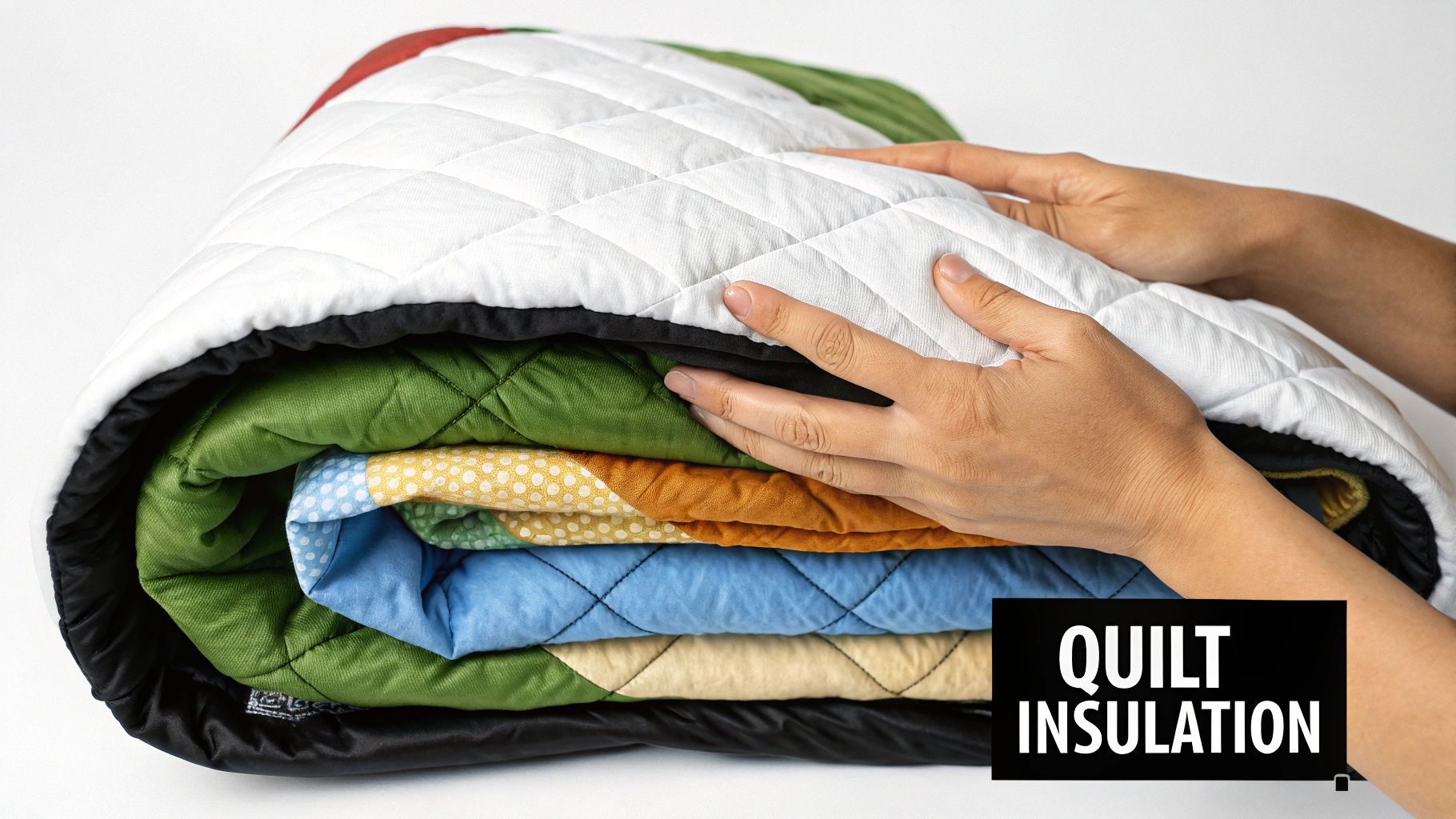
Think of batting as the secret ingredient in your quilt sandwich. It’s the hidden middle layer that takes a flat quilt top and backing and turns it into a warm, cuddly, and substantial blanket. Quilt polyester batting, in particular, acts a lot like the insulation in your home. It traps pockets of air between its synthetic fibers, creating a cozy barrier that holds in warmth without weighing you down.
Without this crucial layer, a quilt is just two pieces of fabric sewn together. Batting is what gives a quilt its soul—its warmth, its dimension, and its comforting feel.
The Core Composition
So, what exactly is this stuff made of? At its heart, polyester batting is created from engineered synthetic polymer fibers. Unlike natural fibers that grow on plants or animals (like cotton or wool), these fibers are man-made to have specific, reliable qualities. One of their biggest perks is a natural resistance to mold and mildew, which makes polyester a fantastic option for quilts in humid climates or for baby quilts that seem to live in the laundry basket.
This synthetic makeup gives quilters some serious advantages:
- Incredible Durability: The polymer fibers are tough. They can handle years of use and frequent washing without falling apart.
- Budget-Friendly: Polyester is generally much more affordable than natural options like wool or silk, letting you quilt more without breaking the bank.
- Fantastic Stitch Definition: It offers excellent loft (a fancy word for thickness), which makes your quilting stitches really pop and creates that puffy, inviting texture we all love.
The real beauty of polyester batting lies in its consistency. It holds its shape beautifully over time, barely shrinks, and delivers reliable warmth, making it a favorite for everything from practical bed quilts to decorative wall hangings that need to stay perfect.
Setting the Stage for Smart Choices
Now, it's not a one-size-fits-all situation. The world of polyester batting is surprisingly diverse. Modern manufacturing gives us everything from super-thin, low-loft battings perfect for intricate, detailed stitching to extra-thick, high-loft versions designed for cloud-like comforters.
To get a better handle on how batting works as the essential middle layer, you can explore our detailed guide on what is quilt batting. Knowing the difference between your options is the key to confidently picking the perfect foundation for your next masterpiece.
How Polyester Batting Actually Behaves in a Quilt
Knowing how a particular batting will behave is the secret to getting the exact look, feel, and lifespan you want for your quilt. It’s not just about how warm the quilt will be; it’s about the texture, the drape, and the durability that makes your creative vision a reality. When it comes to polyester, the two things that matter most are loft and fiber strength. These qualities dictate everything from how your stitches pop to how the quilt holds up after years of being loved.
Think about the difference between a big, puffy comforter and a flat, modern wall hanging. That massive difference in texture and dimension? That’s all about loft—a simple word for the batting's thickness.
High-loft polyester is thick, airy, and full of bounce. It creates deep, dramatic shadows around your quilting stitches, giving your work a bold, three-dimensional look. On the flip side, low-loft options are thin and dense. They create a flatter surface where intricate, detailed stitch work can really be the star of the show. Perfect for when you want a more traditional or minimalist feel.
Modern Polyester Is Not Your Grandmother’s Batting
Beyond the visual texture, polyester batting is a workhorse. It’s known for its incredible resilience. The synthetic fibers are engineered to take a beating—they resist compacting or breaking down even with constant use and frequent trips through the washing machine. This is why it’s such a go-to choice for quilts that are meant to be part of daily life, like a favorite couch throw, a well-loved kid's blanket, or a durable bedspread.
If you’ve heard horror stories about old polyester batting, you can forget them. Issues like shrinkage and "bearding" (where pesky fibers poke through your fabric) are almost entirely a thing of the past. Modern manufacturing has completely changed the game.
- Thermal Bonding: This process uses heat to gently melt the fibers together, locking them into a stable sheet that prevents shifting or bearding.
- Needle-Punching: In this method, thousands of tiny needles pass through the fibers, mechanically locking them together. This creates a strong, dense batting that won't stretch or get distorted.
Thanks to these innovations, today's polyester batting has virtually zero shrinkage. Your quilt top will stay smooth and pucker-free wash after wash. It also means you can place your quilting stitches much farther apart—often up to 10 inches—which gives you a ton of creative freedom.
The sheer reliability of modern polyester has made it a cornerstone in the quilting world. You can see its popularity in the numbers: the global polyester fiber market was valued at USD 129.8 billion in 2024 and is expected to hit USD 207.4 billion by 2034. That’s a huge jump, and it shows just how much quilters and home goods manufacturers have come to depend on it. You can see the full analysis on gminsights.com if you're curious about the market trends.
Choosing the right batting is a big decision, and seeing how different materials stack up can be a huge help. For a simple, clear breakdown, check out our quilt batting comparison chart. It’s designed to help you find the perfect match for any project you can dream up.
Comparing Polyester Batting To Cotton and Wool
Choosing the right batting is a bit like casting an actor for a role—each material brings a completely different personality and feel to the final quilt. It's easy to get bogged down in technical specs, but the secret is to think about your quilt’s future first. What job does it need to do?
Are you making a super puffy, lightweight quilt for a child that needs to stand up to a thousand trips through the washing machine? Quilt polyester batting is your star player. It's tough, warm without being heavy, and bounces back beautifully, wash after wash.
But what if you're aiming for a traditional heirloom quilt with that classic, flat drape? That’s a job for cotton. It gives you that slightly crinkled, "loved-in" look after the first wash—a texture many of us adore for vintage-inspired projects.
The real strengths of polyester lie in its loft and durability, which work together to define its performance.
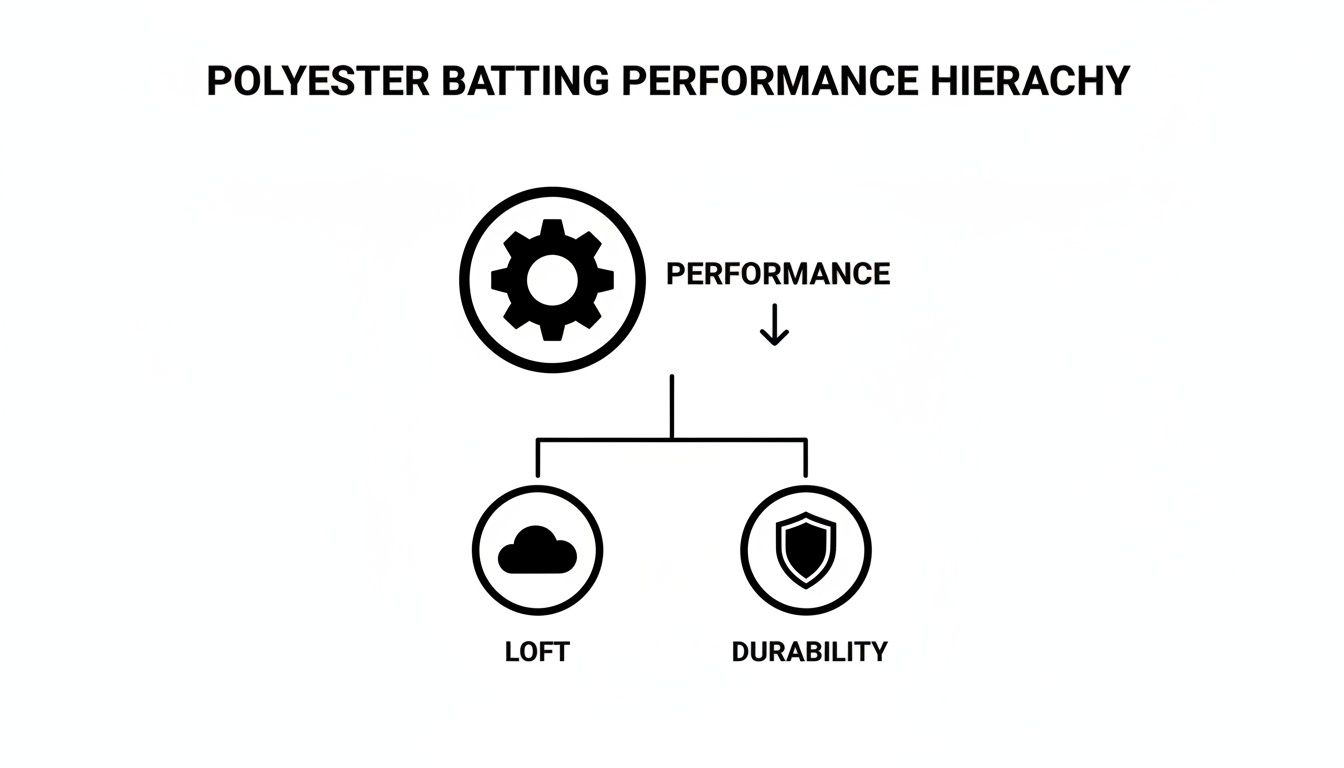
As you can see, polyester is built to provide both puffiness (loft) and incredible strength (durability). This combination makes it a workhorse you can rely on for quilts that will see a lot of action.
Choosing Your Batting by Project
To make the choice crystal clear, let's think about where your quilt will live and what it will do. Every material has a sweet spot, and knowing these will help you nail the perfect choice every single time.
-
For Cozy Warmth and Loft: Wool is the undisputed champion. It’s incredibly warm without the weight and gives your quilting stitches gorgeous, puffy definition. Just keep in mind, it's a premium fiber with a higher price tag.
-
For Breathability and a Classic Look: Nothing beats 100% cotton batting for that old-fashioned feel. It's a natural, breathable fiber that only gets softer with washing, though it will shrink more than synthetics.
-
For Durability and Ease of Care: This is where polyester truly shines. It’s strong, machine-washable with almost no shrinkage, and easy on the wallet, making it perfect for everyday quilts, kid's bedding, and charity projects.
The perfect batting isn't about which one is "best" overall, but which is best for the quilt you're making right now. A high-loft polyester might be perfect for a tied comforter but wrong for a detailed wall hanging.
A Head-to-Head Comparison
To see how these materials really stack up, let's put them side-by-side. If you want to get even more granular, we break it down further in our post on cotton batting vs polyester.
Here's a quick cheat sheet to help you compare the most common batting types at a glance.
Quilt Batting Material Comparison
| Characteristic | Polyester Batting | Cotton Batting | Wool Batting | 80/20 Cotton-Poly Blend |
|---|---|---|---|---|
| Loft | High to Low | Low | Medium to High | Low to Medium |
| Warmth | Very Warm | Moderately Warm | Very Warm | Warm |
| Durability | Excellent | Good | Very Good | Excellent |
| Price | $ | $$ | $$$ | $$ |
| Washability | Excellent | Good (shrinks) | Good (handle gently) | Excellent |
At the end of the day, thinking about the project first ensures you’re not just buying batting; you're choosing the right foundation for the look, feel, and lifespan your quilt deserves.
How to Choose the Right Polyester Batting
Picking the right quilt polyester batting is more than just a step in the process—it's the choice that gives your quilt its soul. Get it right, and you turn a nice quilt into an unforgettable one. Let's break down how to choose the perfect batting for any project, so you can buy with confidence every single time.
Your biggest decision starts with loft. That’s just the quilter’s way of saying "thickness." Think of it like this: are you framing your quilt top in a slim, modern frame or a deep, traditional one? Both are great, but they create completely different results.
Mastering Loft for Your Project
The loft of your batting is what controls the final texture and dimension of your quilt. It all comes down to what you want to be the star of the show: the beautiful fabrics you chose or the intricate stitches you’re planning.
-
Low Loft Batting: This is your best friend when you want your stitch work to pop. Because it's thin, it creates a flat, drapey surface that showcases detailed free-motion quilting or complex pantograph designs beautifully. There’s no puffiness to hide your stitches. It's also the perfect choice for things like table runners and wall hangings that need to lie flat.
-
High Loft Batting: Reach for this when you’re dreaming of a plush, super-cozy quilt with tons of texture. The extra thickness makes the quilting stitches sink in, creating dramatic shadows that make the design jump right off the fabric. High loft is fantastic for tied comforters or quilts with simple, bold quilting where you're going for maximum warmth and that classic, puffy look.
Here’s the simple takeaway: Low loft shows off the stitching. High loft shows off the quilt's cuddly dimension. Knowing which you want is half the battle.
Exploring Specialty Polyester Options
Beyond the basics of thick and thin, the world of polyester batting has some clever innovations designed to make a quilter's life easier. These specialty options can save you a ton of time and open up some new creative doors.
One of the most popular is fusible batting. This stuff is a game-changer. It has a light, heat-activated adhesive on both sides. You just lay out your quilt sandwich, press it with an iron, and the layers fuse together. No more pinning for hours or dealing with messy spray baste. It's especially handy for smaller projects like baby quilts and placemats.
Another brilliant problem-solver is black polyester batting. Ever finish a quilt made with dark fabrics only to see tiny white fibers poking through? That frustrating issue is called "bearding." Black batting is the perfect fix. It provides a dark foundation, so if any fibers migrate through your navy, black, or deep jewel-toned fabrics, they’ll be completely invisible.
If you want to get into the nitty-gritty of these materials, our guide to polyester fiber batting has even more detail.
Selecting the Perfect Width
Last but not least, pay attention to the width of the batting roll. Getting this right from the start saves you the headache of piecing together batting scraps for bigger projects. Polyester batting usually comes in standard widths like 96", 108", and 120".
Here’s a pro tip: measure the quilts you make most often. Add at least four inches of buffer to each side, and buy a roll that comfortably fits that size. It minimizes waste and lets you get right to the fun part of quilting without any extra prep work.
Why Buying Batting by the Roll Is a Smart Move
For any serious quilter, longarm studio, or small quilt shop, there's a tipping point where buying those pre-cut batting packages just doesn't cut it anymore. Stepping up to a full roll of quilt polyester batting isn't just about having more on hand—it's a savvy business move that boosts your bottom line and smooths out your entire workflow. It’s like graduating from buying single spice jars to stocking a professional pantry; you’re always ready for whatever comes next.
The most obvious win is the cost savings. When you break it down, the per-yard price of a full roll is way lower than buying individual packages. Those savings add up fast, giving you the flexibility to either pad your profit margins on finished quilts or pass that great value along to your customers.
But it's not just about the money. Buying by the roll gives you incredible consistency. Working from one continuous piece means you can say goodbye to those slight variations in loft, density, or texture that sometimes pop up between different manufacturing runs. For a longarm quilter tackling a big client order, this is huge. It guarantees every single quilt has the exact same feel and finish.
A Smoother, Smarter Workflow
Cost and consistency are fantastic, but the day-to-day benefits of having a roll at the ready are what really change the game for anyone quilting in high volume.
- No More Scrambling: Forget those last-minute dashes to the fabric store. You can cut precisely what you need, right when you need it, which means more time for the creative part you love.
- Slash Your Waste: You're no longer stuck with pre-cut sizes. Need a custom length for a table runner or a massive king-sized quilt? No problem. You cut what you need and dramatically reduce leftover scraps.
- Easy Inventory Check: A roll is a big, visual reminder of how much batting you have left. This makes it so much easier to plan your next order and keep your supplies managed like a pro.
Buying in bulk brings your quilting operation up to professional standards. It means you’re always prepared for that next commission or sudden spark of inspiration without being derailed by a lack of materials.
The broader market backs up this strategy. The polyester fiber industry is expected to grow to USD 210.6 billion by 2035, thanks to steady demand from home goods and clothing manufacturers. This stable supply chain means batting suppliers—and the quilters who rely on them—can count on having consistent inventory available. You can find more details about the polyester market growth on futuremarketinsights.com.
Don't Forget to Store It Right
A roll of batting is an investment, so you'll want to protect it. The best way to store it is horizontally, either on a sturdy rack or in the cradle it came in. This prevents gravity from creating flat spots and compressing the fibers. Keep it in its plastic sleeve to guard against dust, moisture, and sunlight, all of which can break down the fibers over time. Stored properly, your roll will keep its perfect loft and be ready to go for years.
Proper Care for Quilts with Polyester Batting
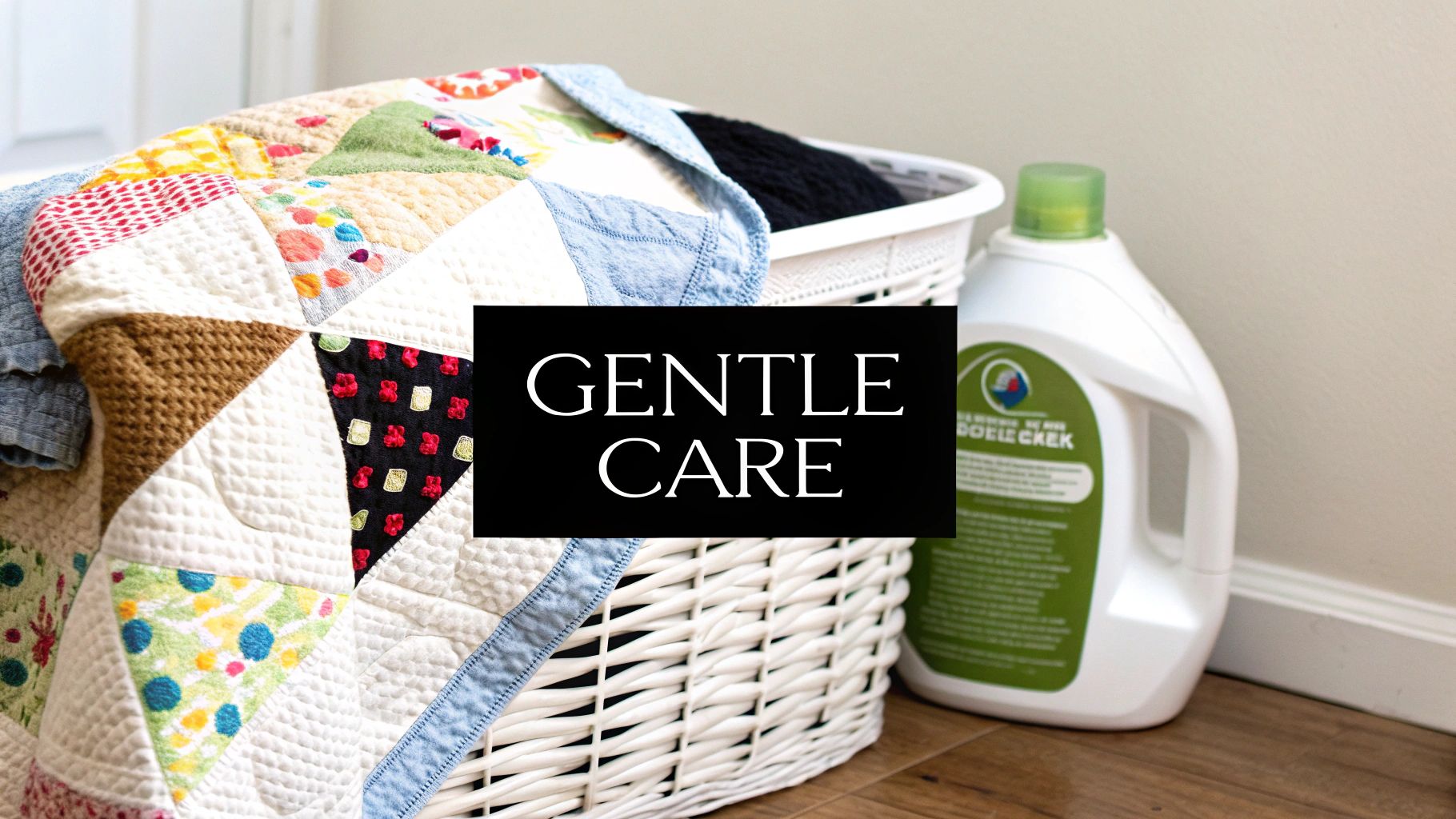
You’ve poured hours of love and creativity into your quilt, and the last thing you want is for it to lose its charm after a few washes. Thankfully, the incredible resilience of quilt polyester batting makes it surprisingly easy to care for, ensuring your masterpiece can be used and loved for years to come.
With a little gentle handling, you can easily protect the loft, colors, and cozy feel you worked so hard to create.
Washing and Drying Your Polyester Quilt
When it’s time to wash your quilt, think gentle. Polyester fibers are tough as nails, but your piecing and stitching appreciate a delicate touch.
Always choose a gentle cycle with cool or cold water. This simple step prevents unnecessary stress on your seams and keeps the fabrics from fading. Stick with a mild, color-safe detergent to keep those colors looking as bright as the day you finished the binding.
When it comes to drying, low and slow is the way to go. You can tumble dry on the lowest heat setting your machine has, but air-drying on a line or draped over a rack is even better. High heat is the enemy of synthetic fibers and can cause damage over time.
Pro Tip: If you're using a machine dryer, toss in a few wool dryer balls. They're fantastic for fluffing the quilt, restoring the batting's loft, and can even shorten the drying time a bit without cranking up the heat.
Once it's clean and dry, how you store your quilt matters just as much.
Storing Your Quilt for Lasting Loft
When putting your quilt away for the season, skip the plastic bags or bins. They can trap moisture, which is bad news for any textile.
Instead, fold your quilt loosely and tuck it into a breathable cotton or muslin bag. Find a cool, dry spot away from direct sunlight, like a closet shelf or a cedar chest, to prevent discoloration and protect the fibers until you're ready to use it again.
The reliability and affordability of these materials are tied to a massive global supply chain. The Asia Pacific region is the powerhouse of polyester fiber production, generating market revenue worth USD 50.34 billion in 2024. This scale is what ensures we have a consistent supply of the high-quality quilt polyester batting we depend on. You can dig deeper into the global polyester fiber market on fortunebusinessinsights.com.
Common Questions About Polyester Batting
Alright, let's wrap this up by tackling some of the most common questions I hear from quilters about working with polyester batting. Think of this as a quick chat to clear up any lingering doubts, so you can feel totally confident picking out and using this workhorse material.
Does Polyester Batting Shrink When Washed?
This is a big one! The short answer is: not really. Modern, high-quality polyester quilt batting has next to no shrinkage, often less than 1%. This is a huge contrast to 100% cotton, which can easily shrink up to 5% and give you that classic, puckered vintage look.
If you’re aiming for a quilt that lays flat and smooth right out of the dryer, polyester is your best friend. Its synthetic fibers are incredibly stable. Still, it's always smart to glance at the manufacturer's packaging just to confirm the exact shrinkage rate.
What Is the Maximum Quilting Distance?
How far apart can you quilt your lines? It really depends on the specific brand and how the batting was made. Thanks to modern bonding techniques, most polyester battings give you a ton of freedom, often allowing for quilting up to 8-10 inches apart.
This generous spacing is a dream come true if you love minimalist, open quilting designs or if you're making a simple tied comforter. Just be sure not to push it past the recommended distance, or you risk the batting shifting and bunching up inside your quilt over time. Always check the label!
Is Polyester Batting Breathable?
Let's be honest: polyester is a synthetic fiber, so it’s not going to breathe quite like natural wool or cotton. However, manufacturing has come a long, long way, and today's poly battings are much more comfortable than their predecessors.
A good low-loft polyester batting offers decent breathability and is perfect for a cozy, all-season quilt. On the flip side, a big, fluffy high-loft polyester is designed for serious warmth, much like a down comforter, which can be too toasty for some people. If you need maximum airflow, go with a natural fiber. But for lightweight warmth and durability that just won't quit, polyester is a fantastic choice.
Ready to start your next project with batting you can trust? Quilt Batting offers premium, consistent polyester batting by the roll, perfect for hobbyists and professionals alike.
Explore our full selection of quilt polyester batting today!