

Ever wondered what gives some polyester batting its structure and stability? You're likely looking at resinated polyester fiber batting, a go-to choice for quilters who need a lightweight, durable filling that stays put.
Think of it like a gentle, flexible hairspray for fabric. The resin lightly coats the fluffy polyester fibers, giving them just enough hold to maintain their shape and resist shifting. This process delivers that wonderful loft and stitch definition we all love, but without adding any unwanted stiffness or weight.
What Is Resinated Polyester Batting?
Picture trying to quilt with a handful of loose fluff from a stuffed animal. It would be a nightmare—bunching up, shifting around, and creating a lumpy, uneven mess. Raw polyester fibers aren't much different. They're soft and airy but have zero structure on their own.
That’s where the magic of resination comes into play. The process involves lightly coating these fibers with a special resin binder and then using heat to cure it, essentially locking the fibers together.
This simple but brilliant step transforms that chaotic fluff into a stable, cohesive sheet of batting. The result is a material strong enough to stand up to the rigors of any quilting machine, from your trusty home domestic to a high-speed longarm.
The Core Benefits for Quilters
The biggest win here is the incredible resistance to fiber migration—that frustrating problem quilters call "bearding." You know, when tiny fibers work their way through your quilt top or backing, especially on dark fabrics. The resin binder acts like a security guard, keeping every single fiber right where it’s supposed to be.
This stability unlocks some serious advantages for your projects:
- Creative Freedom: Feel free to quilt your lines far apart, sometimes up to 10 inches, without a second thought. The fibers won't shift or bunch up, even after years of use.
- Exceptional Durability: The bonded fibers hold up beautifully through countless trips to the washing machine, keeping their loft and structure intact. This makes it an amazing choice for quilts that will be well-loved, like baby quilts or everyday throws.
- Flawless Stitch Definition: The smooth, uniform loft creates the perfect backdrop for your quilting. Every stitch, from simple straight lines to intricate free-motion designs, will stand out with crisp, professional clarity.
By locking the fibers together, the resin creates a batting that’s not only a dream to work with but also ensures your finished quilt looks pristine for generations.
At the end of the day, resinated polyester is all about reliability. To get a better sense of how this material compares to others, you can explore the fundamentals of polyester fiber batting and see where it fits in the wider world of quilting. It’s not complicated—it's just a dependable foundation that lets you create beautiful, lasting quilts with less hassle and more creative joy.
How Resin Transforms Fluffy Fibers Into Batting
Ever pulled a cloud of fluffy polyester out of a bag and wondered how it becomes the smooth, stable batting that goes into your quilts? It’s not magic, but it is a clever bit of textile engineering. The process transforms a chaotic mess of loose fibers into a uniform, reliable sheet, and the secret ingredient is a special resin.
Think of it like making a gourmet Rice Krispie treat. You start with the airy, puffy cereal—that’s your raw polyester. On its own, it’s light but has no structure. The melted marshmallow is the resin, the binder that holds everything together into a cohesive, sliceable square. The journey from fluff to finished batting follows a similar, carefully controlled three-step process.
This visual gives you a great overview of how those raw fibers become the quilt-ready batting we all know and love.
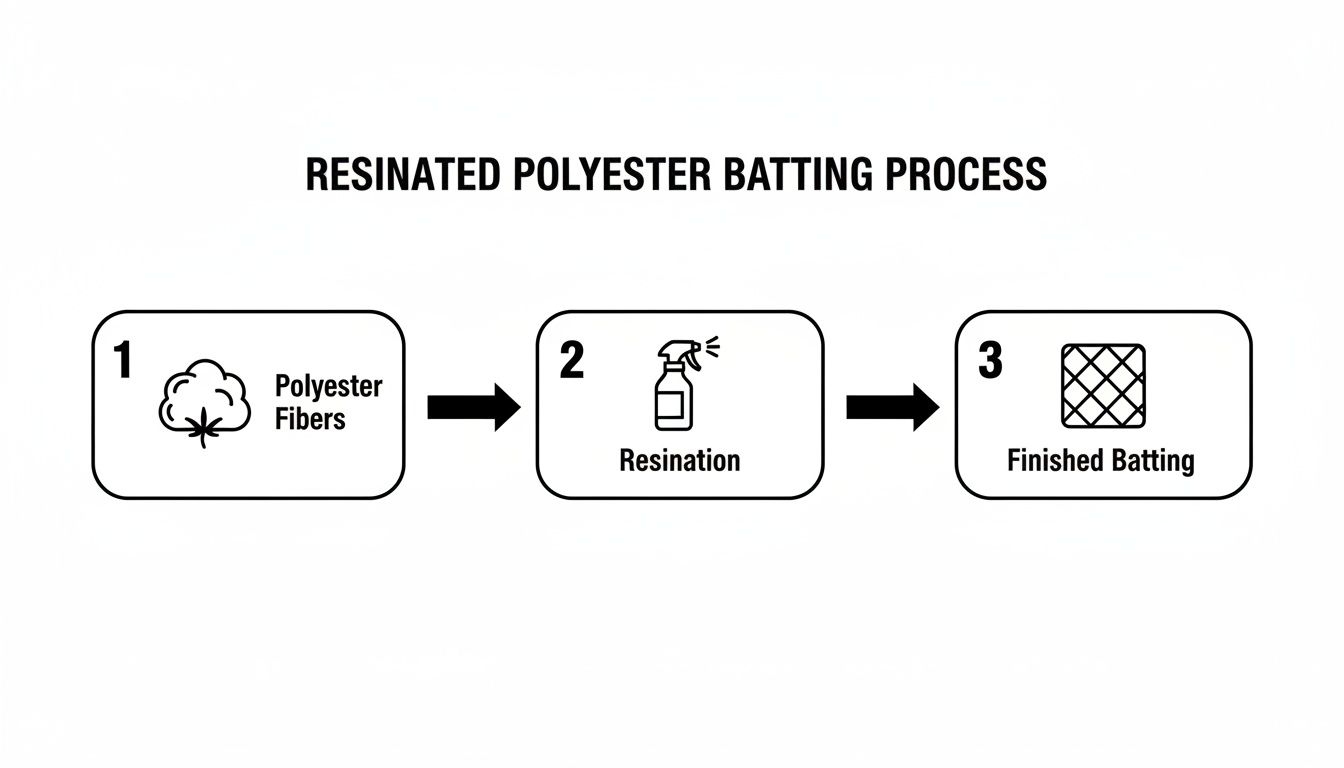
The key thing to notice is that middle stage—the resination—where a light binder turns loose material into a stable, cohesive batting.
Step 1: Carding the Fibers
It all starts with huge bales of raw polyester fibers. These are fed into a machine called a carder, which is basically a set of giant rollers covered in fine, wire-like teeth. As the fibers pass through, the teeth gently comb and align them, much like brushing out tangled hair.
This carding process is critical. It separates every single fiber, gets them all pointing in roughly the same direction, and creates a delicate, continuous web. Without this step, you’d end up with clumps and thin spots in your batting—a quilter’s nightmare!
Step 2: Applying the Resin Binder
With a smooth web of fibers formed, it's time for the "resinated" part of resinated polyester fiber batting. The web is misted with a light, even coating of a liquid resin binder. This is our "marshmallow" moment—the ingredient that’s going to hold everything together.
The resin isn't like a heavy glue. It’s specially formulated to be lightweight and flexible once it's cured. It doesn’t drench the fibers and make them stiff; instead, it creates thousands of tiny connection points wherever the individual fibers cross.
The resin’s job isn't to create a solid sheet, but to form a stable, interconnected lattice of fibers. This maintains the batting’s soft loft while giving it the internal structure it needs to resist shifting and stretching.
This is what really sets resinated batting apart from needle-punched or other types, giving it that perfect blend of plushness and strength.
Step 3: Heat Curing for Lasting Stability
The final step locks it all in. The resin-coated web glides through a large, controlled-temperature oven. The heat activates the resin, curing it and permanently bonding the fibers together right where they intersect.
This thermal bonding process is what gives the batting its incredible stability and resilience. The cured resin creates a strong-yet-flexible structure that stops fibers from pulling apart or—even worse—migrating through your quilt top. It’s this very strength that allows for quilting lines spaced up to 10 inches apart, a freedom you just don't get with less stable battings.
In the quilting world, resinated polyester is a true workhorse, prized for its loft and toughness. This specialized batting is created by bonding polyester fibers with a resin—often a saturated polyester resin—which provides the superior stability needed for both domestic machines and longarm quilting. In fact, the global market for this type of resin was valued at USD 5.38 billion in 2023 and is expected to hit USD 7.91 billion by 2030, showing just how much demand there is for these high-performance materials. You can dig into the numbers in this report from Grand View Research. From start to finish, the entire process is designed to give quilters a batting that delivers creative freedom and results that last.
Why Modern Quilters Rely On Resinated Polyester
It’s one thing to understand the science behind a batting, but what really matters is how it feels under your needle and how it holds up in a finished quilt. From professional longarmers to those quilting on a home machine, quilters are turning to resinated polyester fiber batting for one simple reason: it just works. It solves common frustrations and delivers reliable, beautiful results, quilt after quilt.
This isn't just a happy accident. The rise of this batting is tied to the materials that make it possible. The global polyester fiber market was valued at an incredible USD 81.1 billion in 2022 and is expected to hit USD 160.1 billion by 2032. For us quilters, that massive growth means a consistent supply of high-quality fibers for the batting we depend on. You can read more on this trend in the full polyester fiber market analysis.
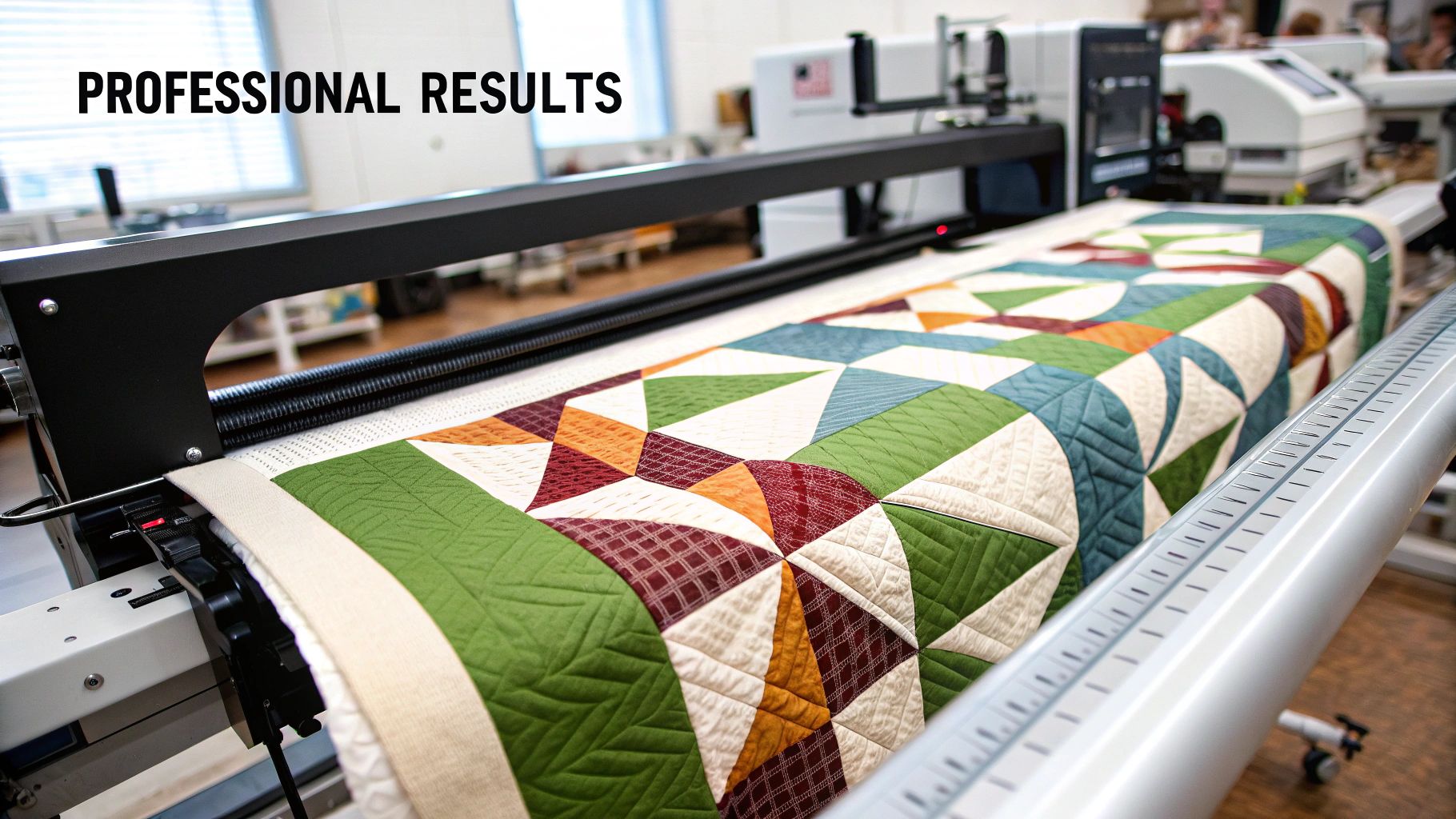
This reliability translates directly into real-world benefits that solve some of the biggest headaches in quilting.
Unmatched Stability for Longarm Quilters
If you’re a longarmer, you know the battle of keeping even tension across a massive quilt. A flimsy batting that stretches or shifts can spell disaster, leading to puckers, tucks, and a whole lot of frustration. This is precisely where resinated polyester proves its worth.
The resin-bonded structure gives it fantastic stability on the frame. It simply refuses to stretch and distort as you roll the quilt, keeping your sandwich smooth and taut from start to finish. That means less time fighting the machine and more time laying down gorgeous, even stitches.
For a longarmer, it all comes down to control. Resinated batting is predictable and trustworthy, letting you quilt faster and more confidently without worrying about the layers shifting or bunching up.
Superior Performance for Home Machine Quilters
Quilting on a domestic machine comes with its own unique challenges. You're wrestling a bulky quilt through a small throat space and praying that fibers don't poke through your beautiful fabric. Resinated polyester offers a helping hand with both.
Its incredible resistance to bearding is a true lifesaver, especially if you love working with dark or high-contrast fabrics where those little white fibers love to appear. The resin effectively locks the fibers in place, so your navy blue or black backgrounds stay pristine.
On top of that, it’s just plain easy to work with. It won’t pull apart or get thin spots while you’re basting, which makes the whole prep process go that much smoother.
Durability and Loft That Lasts
A quilt is made to be used, loved, and washed. Over time, some battings can flatten out or get lumpy, but resinated polyester is built for the long haul.
- Excellent Loft Retention: The bonded fibers keep their airy, plush feel wash after wash. This makes it an amazing choice for kids' quilts that are destined for a life of adventure (and many trips through the laundry).
- Hypoallergenic Properties: Since polyester is naturally resistant to mold and mildew, it’s a great option for anyone with allergies or sensitivities.
- Show-Stopping Stitch Definition: The consistent, medium loft is the perfect backdrop for your quilting. Every stitch pops with crisp, professional definition, really showing off your hard work.
At the end of the day, choosing a resinated polyester fiber batting is about getting a better result with less fuss. It provides a stable foundation—much like how a scrim can add strength, though the method is different. You can learn more about how scrim adds stability to other types of batting in our guide. This batting lets you focus on your creativity, trusting that your finished quilt will be durable, beautiful, and everything you hoped it would be.
Choosing the Right Batting for Your Project
Picking the right batting is a lot like choosing the perfect fabric for your quilt top—it completely sets the tone for your finished masterpiece. The batting you land on will directly shape the final look, feel, and even the purpose of your quilt. While resinated polyester fiber batting is a fantastic workhorse for so many projects, knowing how it stacks up against other popular choices will help you make the perfect decision, every single time.
Ultimately, your project's goal should drive your choice. Are you going for a quilt with dramatic, high-definition stitching that really pops? Or are you dreaming of a soft, antique-style quilt that drapes like it's been loved for generations? Each type of batting has its moment to shine, and knowing which one to grab will turn a good quilt into a truly great one.
Let’s break down how resinated polyester compares to the other favorites in the quilting world.
Resinated Polyester vs. Cotton Batting
Cotton batting is the tried-and-true classic, the go-to for quilters chasing that traditional, low-loft look. It’s incredibly soft and breathable, creating quilts that feel light and drape beautifully over a couch or bed. After its first wash, cotton batting shrinks a little (usually around 3-5%), which is what gives you that wonderfully crinkly, time-honored vintage texture.
But where cotton gives you a subtle, flat finish, resinated polyester is all about bold definition. Its higher loft and stable structure make it the clear winner for any project where you want your quilting stitches to be the star of the show.
- Choose Resinated Polyester If: You want your quilting to stand out with crisp, clear lines and a plush, puffy texture. It’s perfect for modern quilts, wall hangings, and pieces with intricate free-motion work.
- Choose Cotton If: You’re aiming for a traditional, heirloom look with a soft drape and that classic, slightly puckered finish.
Resinated Polyester vs. 80/20 Blends
You’ll often hear the 80/20 cotton-polyester blend called the "best of both worlds." It really does a great job of combining the softness and breathability of cotton with the strength and a bit of the loft from polyester. This blend offers more puffiness than 100% cotton but less than a full polyester batting, making it a wonderfully versatile, middle-of-the-road option.
But while 80/20 blends are excellent all-rounders, they can't quite match the specialized performance of resinated polyester when you have a specific goal in mind. For quilters who need maximum durability and pronounced stitch definition, the 100% resinated polyester structure simply performs better. That resin binder ensures the fibers stay locked in place, preventing bearding and holding onto its loft through heavy use and frequent washing—something a blend can't fully promise.
The decision here really comes down to specialization. An 80/20 blend is a fantastic generalist, but for projects demanding high loft and flawless stitch clarity, resinated polyester is the expert you call in.
Resinated Polyester vs. Wool Batting
When it comes to pure warmth and luxurious loft, wool is the undisputed champion. It’s incredibly breathable and acts as a natural insulator, keeping you surprisingly warm in the winter and cool in the summer. Wool batting creates quilts that are wonderfully light, airy, and exceptionally cozy.
The trade-off, however, often comes down to care and cost. Wool can be a bit more delicate to launder and usually has a higher price tag. In contrast, resinated polyester gives you excellent loft and warmth at a much more budget-friendly price, with the huge bonus of being incredibly easy to care for. It's tough, machine washable, and stands up to the rigors of everyday life, making it a more practical choice for things like kids' quilts or frequently used throws.
For a deeper dive into the characteristics of these and other materials, our comprehensive guide on the different types of quilt batting can help you explore all your options.
Quilting Batting Comparison Chart
Sometimes you just need to see it all laid out. This chart breaks down the key features of each batting type to simplify your decision. Use it as a quick reference to match the right material to what your next project needs.
| Batting Type | Primary Benefit | Best For | Loft | Shrinkage |
|---|---|---|---|---|
| Resinated Polyester | Stitch Definition & Durability | Modern quilts, wall hangings, kids' quilts | High | Almost None (<1%) |
| 100% Cotton | Soft Drape & Vintage Look | Traditional heirloom quilts, bedspreads | Low | Low (3-5%) |
| 80/20 Blend | Versatility & Softness | All-purpose quilting, everyday throws | Medium | Low (2-3%) |
| Wool | Superior Warmth & Lightness | Luxury quilts, cozy winter blankets | High | Minimal (2-3%) |
At the end of the day, there is no single "best" batting—only the best batting for your specific project. By understanding the unique strengths of resinated polyester fiber batting, you can confidently choose it for quilts that need to be durable, show off stunning stitch work, and hold their beautiful loft for years to come.
Pro Tips for Flawless Quilting Results
Working with resinated polyester batting is a pretty smooth ride, but a few inside tips can take your finished quilt from great to absolutely show-stopping. It’s all in the details—like picking the right needle or getting your quilt sandwich just right—that really let this batting’s best qualities shine.
These are the practical tricks that help you nail that flawless, professional finish every single time. Whether you're on a speedy longarm or your trusty home sewing machine, a little know-how will help you create quilts that are as durable as they are beautiful.
Take Advantage of the Extra Stability
One of the biggest perks of resinated polyester is how stable it is. The resin binder holds all the fibers together, which means you don't have to quilt it to death just to keep it from shifting or bunching up down the road. This opens up a ton of creative possibilities.
You can confidently space your quilting lines up to 10 inches apart! This makes it a fantastic choice for modern quilts with lots of negative space or any project where you want the fabric and piecing to be the main event. You get all the design freedom without sacrificing the quilt's integrity.
The resin binder gives you creative freedom—quilt as little or as much as your design requires without fear of the fibers shifting.
The Right Needle Makes All the Difference
Skipped stitches are a massive headache, but thankfully, it's usually an easy fix. Polyester fibers are a bit slick, and a standard needle can sometimes slip right past them instead of piercing through. The key is to use the right tool for the job.
- Go for a sharp: A Microtex or a Topstitch needle is your best bet. They have an extra-sharp, fine point that’s designed to cut through fibers cleanly.
- Pick the right size: An 80/12 or 90/14 needle is usually the sweet spot for quilting through the three layers of your quilt sandwich.
- Swap it out: Don't forget to change your needle after every 8-10 hours of sewing. A dull needle is just asking for trouble!
This one small change can have a huge impact on your stitch quality, giving you beautiful, even stitches from beginning to end.
Baste It Like You Mean It
A perfectly smooth, pucker-free quilt starts with a great baste. Because resinated polyester is so stable and easy to handle, this step is pretty straightforward. The goal is to create a secure, wrinkle-free sandwich that won’t budge an inch while you’re quilting.
Start by laying your backing fabric out flat, taping it down to a large table or the floor so it's taut. Next, smooth the batting over it, working from the center out to get rid of any wrinkles. Do the same with your quilt top. Whether you use pins or a spray baste, be generous—placing pins every 4-6 inches will keep everything locked in place.
Loading on a Longarm Frame
For you longarmers out there, loading the batting correctly is crucial. Resinated polyester doesn't have much stretch to it, but you still want to be gentle.
When you load the batting onto your frame, keep the tension minimal. You want it to "float" between the backing and the top, lying completely flat without being pulled tight. This prevents any stretching or distortion and ensures your finished quilt will hang perfectly straight.
And one last, very important safety tip: resinated polyester fiber batting is not microwave-safe. The resin and polyester can melt or even catch fire in a microwave. For projects like bowl cozies that will be heated, always stick with a 100% cotton batting specifically designed for that purpose, like Wrap-N-Zap.
A Smart Buyer’s Guide to Batting Rolls
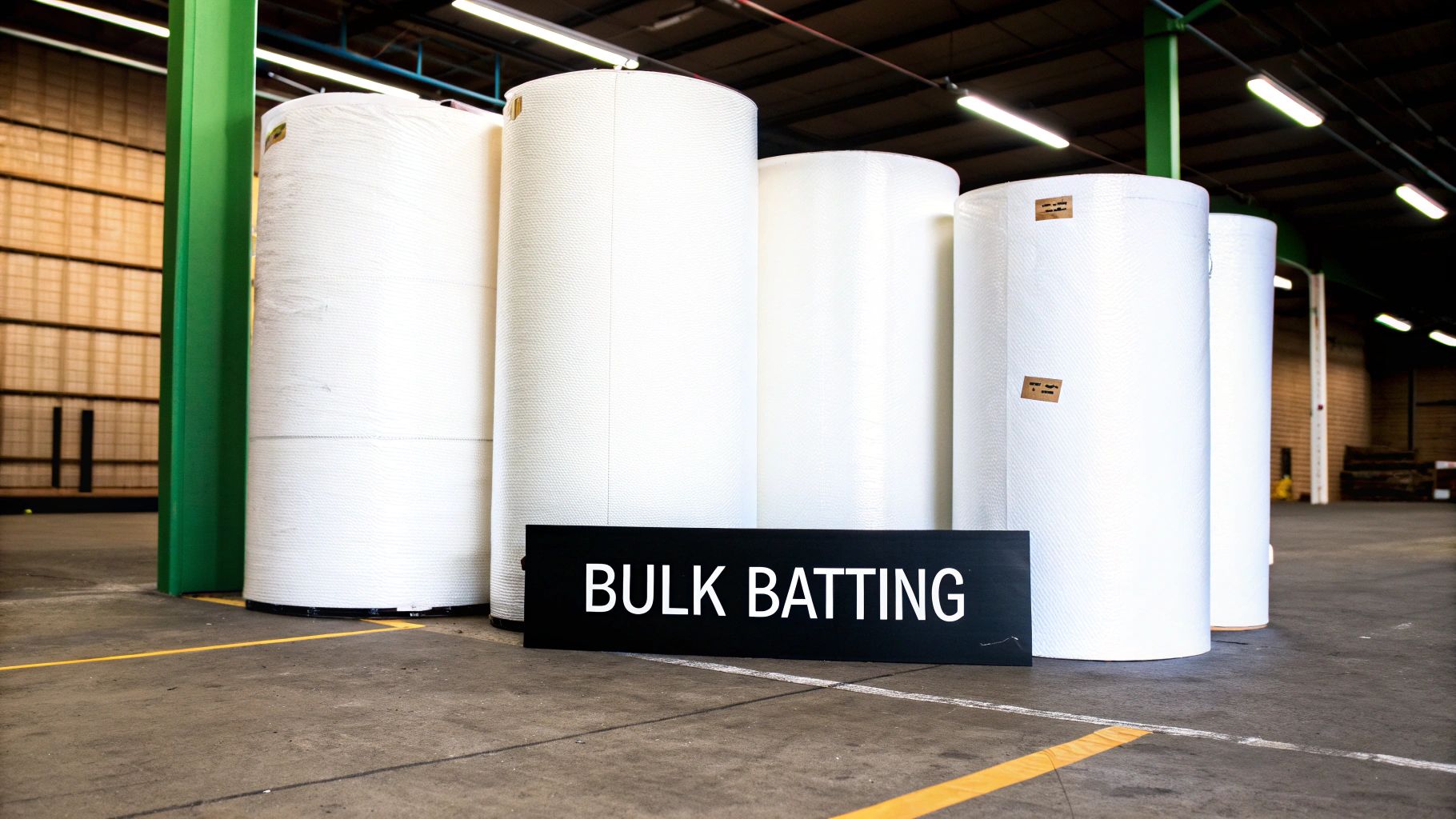
For any serious quilter, there comes a point when you graduate from buying single packages of batting to buying it by the roll. It’s a huge step forward, kind of like moving from buying ingredients for one dinner to stocking a full-blown pantry. It saves money, simplifies your whole process, and gives your quilts a beautiful consistency. You’re simply always ready when inspiration strikes.
Buying in bulk isn't just about the cost savings, though those are significant. When you work from a single roll, every quilt you make has the exact same loft, drape, and feel. That kind of reliability is gold, especially if you're a longarmer or a quilter who creates a series of pieces and needs predictable, high-quality results every single time.
Decoding Roll Widths and Sizes
One of the best parts about buying batting on a roll is getting to pick the perfect width for the quilts you make most often. Say goodbye to the annoying task of franken-batting! Rolls of resinated polyester fiber batting come in a few handy widths, each designed for different projects.
- 96-Inch Width: This is your workhorse for full and queen-sized quilts. It gives you plenty of coverage without a ton of wasteful trimming.
- 108-Inch Width: A really popular size that's great for queen quilts and smaller kings, giving you that extra bit of breathing room on the sides.
- 120-Inch Width: If you’re making magnificent, seamless king or California king quilts, this is your go-to. No seams, no fuss.
Picking the right width from the get-go saves so much time and guarantees a smooth, professional finish. For a deeper dive, take a look at our guide to standard quilt batting sizes to find the perfect match for what you love to create.
Care and Washing for Long-Lasting Beauty
After you’ve put all that love and work into your quilt, you want it to last. The good news is that taking care of a quilt with resinated polyester is a breeze.
Because the fibers in resinated polyester are bonded together, the batting is incredibly durable. It’s built to handle real life, holding its structure and loft through regular washing and use. Your quilt will stay just as beautiful as the day you stitched the last thread.
For the best results, just machine wash your quilt on a gentle cycle using cold water and a mild soap. You can toss it in the dryer on low heat or, if you prefer, lay it flat to air dry. That’s it! This simple care routine will protect the fibers and your beautiful quilting, making sure your creation can be snuggled under and cherished for a lifetime.
We Answer Your Most Common Questions
Even with a batting this great, you probably still have a few questions before you dive in. I get it! When it comes to something as important as the inside of your quilt, you want to be sure. Most quilters I talk to ask about the same things, so let's get those questions answered right now.
Think of this as our little chat over the cutting table. I want you to feel completely confident when you choose resinated polyester fiber batting for your next project.
Can I Actually Hand Quilt with This Stuff?
Okay, let's be honest. If you're a dedicated hand quilter, resinated polyester might feel a bit stubborn compared to a soft cotton or wool. That resin we love for stability adds a bit of resistance, making it tougher to push a needle through.
But is it impossible? Not at all! Plenty of hand quilters use it and love the results. The trick is to arm yourself properly: grab a sturdy thimble and your sharpest, strongest needles (think quilting Betweens). The incredible stitch definition and puffy loft you'll get in return can make that little bit of extra effort totally worth it.
What's This "Bearding" I Hear About, and Does This Batting Stop It?
Ah, the dreaded "bearding." That's the frustrating moment when little fibers from your batting start poking through the top or backing of your quilt, making it look fuzzy. If you've ever used a dark fabric, you know exactly what I'm talking about.
This is where resinated polyester truly shines. The resin literally locks all those fibers together, making it incredibly difficult for them to escape. It’s a fantastic choice for high-contrast quilts because you can trust that your blacks will stay black and your navys will stay crisp, without any annoying white fuzz.
The bonded nature of resinated batting is your best defense against bearding. It ensures your dark fabrics stay crisp and clean, preserving the visual impact of your design for years to come.
Should I Pre-Wash It Before I Start Quilting?
This is an easy one: No! Please don't pre-wash resinated polyester batting. It's designed and manufactured to be perfect right out of the package.
Washing it beforehand can break down that delicate resin binder, which could cause the batting to get lumpy, stretched out, or just plain weird. Plus, there's no real reason to—high-quality poly batting has virtually zero shrinkage (usually less than 1%). Just layer it in your quilt sandwich and you're good to go.
Ready to experience the stability and beautiful stitch definition of resinated polyester batting for yourself? At Quilt Batting, we offer premium batting by the roll, perfect for your next big project.
Explore our full selection and find the ideal batting for your quilting needs at https://quiltbatting.shop.