

When you're working with a quilt top full of crisp whites, light pastels, or soft creams, the batting you choose can make or break the final look. Warm & White batting is the secret weapon for quilters in this exact situation. Its fibers are specially bleached, which means you never have to worry about the dingy, yellowish shadow that natural-colored batting can sometimes cast through lighter fabrics.
It’s that perfect mix of a classic cotton feel with just enough polyester to add stability, creating a reliable and beautiful foundation for so many different quilt projects.
Why Quilters Choose Warm & White Batting
Imagine your quilt top is a beautiful painting. The batting is the canvas it's built on. If you were painting with delicate whites and soft hues, you wouldn't start with a yellowed, dingy canvas, right? Of course not—it would completely throw off your colors. That’s exactly the problem Warm & White batting solves for us quilters. It’s more than just a filler; it’s the key to a clean, professional finish.
Its popularity is no accident. It’s a smart, practical solution to a real problem quilters face. After spending countless hours piecing a stunning quilt top, the last thing you want is for your batting to peek through and muddy your brilliant whites. Warm & White is your insurance policy, making sure your whites stay bright and your colors pop, just like you intended.
The Ideal Blend for Performance
The real magic behind Warm & White is its time-tested recipe: an 80% cotton and 20% polyester blend. This isn't just a random mix; it's a thoughtful formula designed to give quilters the best of both worlds.
- The Cotton Contribution (80%): This is where that soft, breathable, traditional feel comes from. It gives the finished quilt that gentle, comforting weight and lovely drape that reminds you of a vintage heirloom.
- The Polyester Power (20%): A little bit of polyester goes a long way. It adds strength, stability, and just a touch of loft. This helps the batting hold up beautifully to the tension of a longarm machine without stretching or tearing, and it makes your quilting stitches stand out with a subtle, beautiful definition.
This blend creates a batting that’s not only a dream to work with but also incredibly durable, ready to stand up to years of cuddles and machine washes. If you want to dive deeper into the nuts and bolts of batting, you can check out our guide on the basics of quilt batting.
A Solution Born from Innovation
Warm & White has become a staple in sewing rooms and longarm studios everywhere, and for good reason. That perfect 80/20 blend gives you just the right amount of loft and warmth, but without any of the yellowing that can sometimes happen with other batting types. This kind of blend really started taking off in the late 1990s, when manufacturers began listening to what quilters needed—a batting that would stay bright wash after wash and look flawless under light-colored quilts.
From a quilter's perspective, it needles like a dream, fights off "bearding" (when fibers poke through your fabric), and provides a cozy 1/4-inch loft. It's just right for everything from a sweet baby quilt to a modern, graphic wall hanging. You can even discover more insights about the quilt batting market on Verified Market Research.
Key Takeaway: Think of Warm & White as color insurance for your quilt. Its bleached, pure white fibers are your guarantee that light fabrics will stay true to their color, with no discoloration bleeding through from the inside.
Choosing Between Warm & White and Other Battings
Stepping into the world of batting can feel like trying to choose the perfect ingredient for a recipe when you’re faced with a wall of options. Each type has its own personality, its own story to tell within your quilt. While Warm & White batting is a superstar for light-colored projects, knowing how it stacks up against its cousins is key to making a confident choice every single time.
This isn't about memorizing fiber percentages; it's about understanding the final result. You want to match the batting to the quilt's destiny—will it be a breezy summer throw, a cozy heirloom draped over a sofa, or a showpiece with intricate stitching? Let's get to know the cast of characters in the batting world.
Warm & White vs. Its Rustic Cousin, Warm & Natural
The most common decision quilters face is choosing between Warm & White and its close relative, Warm & Natural. They're practically twins, sharing the same reliable 80/20 cotton-polyester blend and a stabilizing scrim. That means you get similar performance in terms of loft, drape, and quilting distance from both.
The one thing that sets them apart? Color.
- Warm & White Batting: This batting is bleached to achieve a pure, bright white. It’s the clean canvas you need for quilts featuring white, cream, or pale pastel fabrics, guaranteeing your colors stay true without any shadowing from within.
- Warm & Natural Batting: This version is left in its natural, unbleached state. It has a gentle, creamy off-white color and often features tiny flecks from the cotton plant, giving it an organic, rustic charm. It’s perfect for darker color palettes, primitive designs, or antique-inspired quilts.
The choice really is just aesthetic. If your quilt top has significant white or light areas, Warm & White is your safest bet for a crisp, clean finish. Using Warm & Natural under a white background can sometimes lend a subtle antique or yellowish tint, which may or may not be the effect you're going for.
This simple guide helps visualize when to reach for Warm & White.
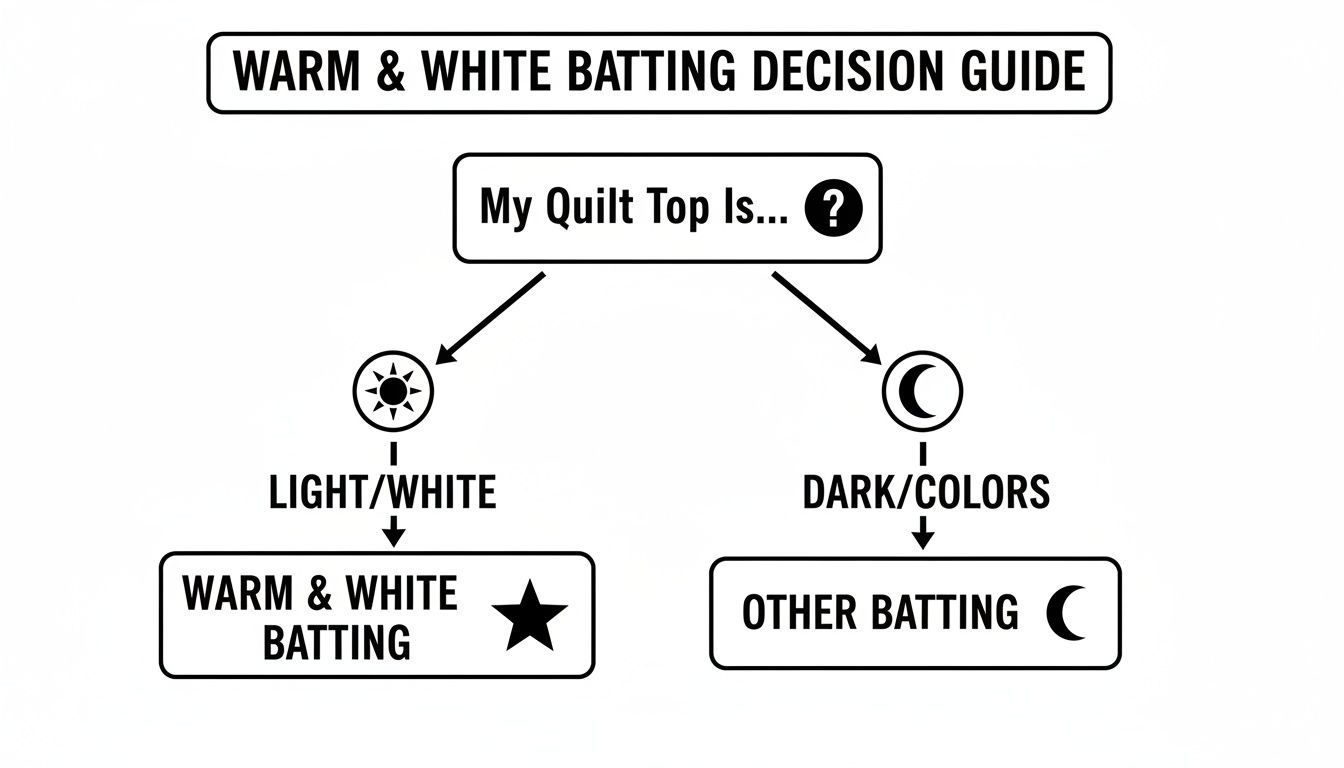
As you can see, the decision often comes down to protecting the integrity of your light-colored fabrics. That makes Warm & White the specialist for those projects.
The Broader Batting Family
Beyond this initial choice, other fibers offer their own unique personalities. So, how does the balanced 80/20 blend of Warm & White compare to batting made from a single fiber type? Let's take a look.
To make things easier, here's a quick reference guide to help you see the key differences at a glance.
Batting Comparison At a Glance
This table breaks down the main characteristics of popular batting types, helping you pick the perfect one for your next quilt.
| Batting Type | Fiber Content | Color & Appearance | Best For | Key Benefit |
|---|---|---|---|---|
| Warm & White | 80% Cotton, 20% Polyester | Bright, pure white | Light-colored or white quilt tops | Prevents color distortion; brightens fabrics |
| Warm & Natural | 80% Cotton, 20% Polyester | Natural, off-white with flecks | Dark or medium-toned quilts, primitive styles | Adds rustic charm; won't show through darks |
| 100% Cotton | 100% Cotton | Natural or White | Traditional quilts, vintage look | Creates a classic, crinkled "puckered" finish |
| 100% Wool | 100% Wool | Natural off-white | Quilts needing warmth without bulk | Exceptional loft for stitch definition |
This chart is a great starting point, but let's dive into the specifics of what makes each one tick.
100% Cotton: The Purist's Dream
A favorite for traditionalists, 100% cotton batting is celebrated for its exceptional breathability and soft, natural feel. It creates that classic, slightly crinkled look after washing because it typically shrinks around 3-5%. For anyone chasing that vintage, well-loved aesthetic, this is a beautiful feature.
Compared to the 80/20 blend in Warm & White, however, it can be slightly heavier and may require you to place your quilting stitches a bit closer together to keep it stable, unless it includes a scrim. For a deeper dive, our comprehensive quilt batting comparison chart offers even more detail.
100% Wool: The Luxurious Insulator
Wool is the undisputed champion of warmth without the weight. It offers a higher loft than cotton or blends, which makes your quilting stitches pop with gorgeous definition. It’s also naturally resilient, bouncing back from creases and draping beautifully over a bed or sofa.
The main trade-offs are cost and care. Wool is a premium fiber and can be more expensive. It also requires a gentle touch during washing to prevent excessive shrinkage or felting, though many modern wool battings are specially treated to be machine washable.
Polyester and Other Blends
Pure polyester batting is known for its high loft, budget-friendly price, and zero shrinkage. It’s a fantastic choice for puffy comforters, tied quilts, or projects where you absolutely want to avoid any crinkling. The downside? It doesn't breathe as well as natural fibers and can sometimes result in "bearding," where tiny fibers migrate through the fabric.
This is exactly why the 80/20 blend found in Warm & White is such a workhorse. You get the soft, breathable nature of cotton combined with the strength, stability, and wrinkle resistance of polyester. It’s a reliable and versatile middle ground that serves a massive range of quilting needs beautifully.
Getting the Feel of Your Quilt Just Right
Choosing a batting isn't just a technical step in making a quilt; it's where you decide how that quilt will ultimately feel. The words "loft" and "drape" get thrown around a lot, but they're really just the keys to understanding how your quilt will look, feel, and behave. Once you get a handle on these two concepts, you can predict exactly how your finished quilt will turn out.
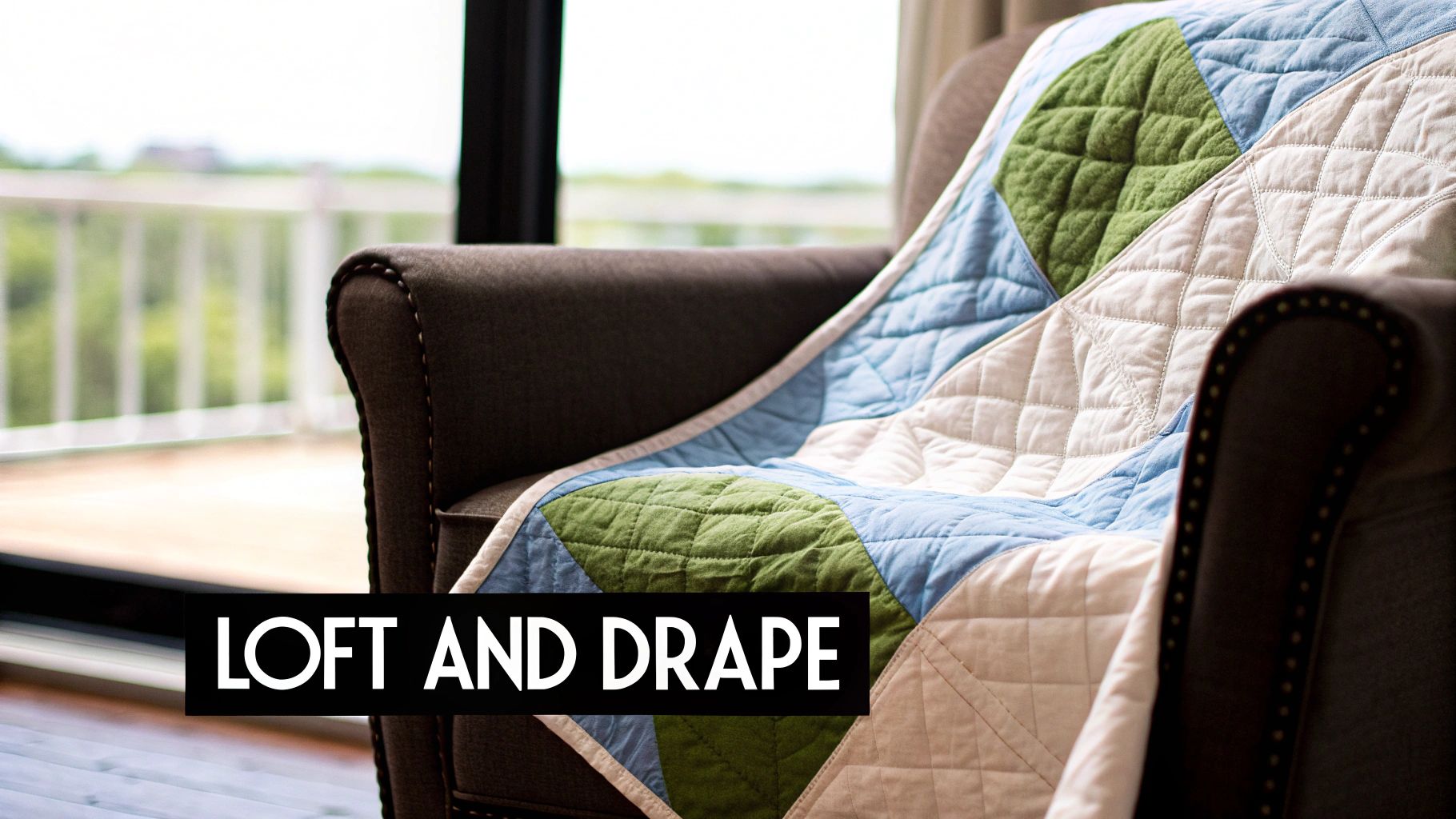
Think of loft and drape as the soul of your quilt. Loft gives it that cozy, puffy dimension and warmth, while drape decides how it will fall and cuddle. Get these two right, and you've turned a simple fabric sandwich into a true heirloom.
Understanding Loft: The "Puff" Factor
In simple terms, loft is just the thickness or puffiness of your batting. It's the difference between a thin, flat summer coverlet and a big, fluffy comforter. That "puff" is what loft is all about.
Warm & White batting sits in that perfect low-to-medium loft range, which is truly the sweet spot for most quilters. It has just enough body to make your quilting stitches pop and give them beautiful definition, but not so much that the quilt becomes stiff or hard to handle. This is how you get that classic, cuddly quilt feel—soft and inviting, yet still clean and defined. You can dive deeper into why this matters by reading about the benefits of low loft batting for quilts.
This perfectly balanced loft is also a huge reason why the batting is so efficient to work with. Because it isn't overly bulky, quilters using Warm & White often find they can reduce their quilting time by an average of 25%. For anyone running a quilting business, that's a massive win.
Understanding Drape: The Quilt’s "Cuddle" Factor
If loft is the puff, then drape is the cuddle. It’s what makes a quilt flow and puddle softly over the arm of a sofa instead of hanging rigidly like a tapestry. That beautiful, fluid movement is its drape, and it comes down to what the batting is made of.
The 80/20 cotton-polyester blend in Warm & White gives you the best of both worlds. The cotton lends a soft, natural weight, while the polyester adds a little bit of spring and resilience, keeping it from feeling limp. The result? A quilt that feels both cozy and structured. It folds neatly but also contours beautifully when you wrap it around yourself.
What This Means for You: A quilt made with Warm & White won't feel stiff or boardy. It will hug you back, drape beautifully over a bed, and still look elegant when folded on a quilt ladder.
This balance is about more than just feel—it's about performance. Those polyester fibers in Warm & White batting help it hold 15-20% more heat than some all-cotton options, making it surprisingly warm for its weight. Better yet, premium versions promise zero shrinkage after washing. That's a huge relief compared to the 5-8% shrinkage you can get with some natural fiber battings, saving quilters and longarmers from the headache of puckered, distorted quilts.
Finding the Perfect Project for Warm & White
Alright, we’ve covered the technical stuff—how Warm & White batting feels and functions. Now for the really fun part: figuring out how to turn that knowledge into a gorgeous finished quilt. This batting is far from a one-trick pony; its special qualities make it a fantastic match for so many different projects, giving you confidence that your hard work will look amazing from the first stitch to the final wash.
Whether you're piecing a bold, modern masterpiece or a soft, cuddly blanket for a new baby, Warm & White provides the perfect foundation. Think of it as your versatile studio workhorse, ready to help you tackle any project knowing the results will be clean, bright, and beautiful.
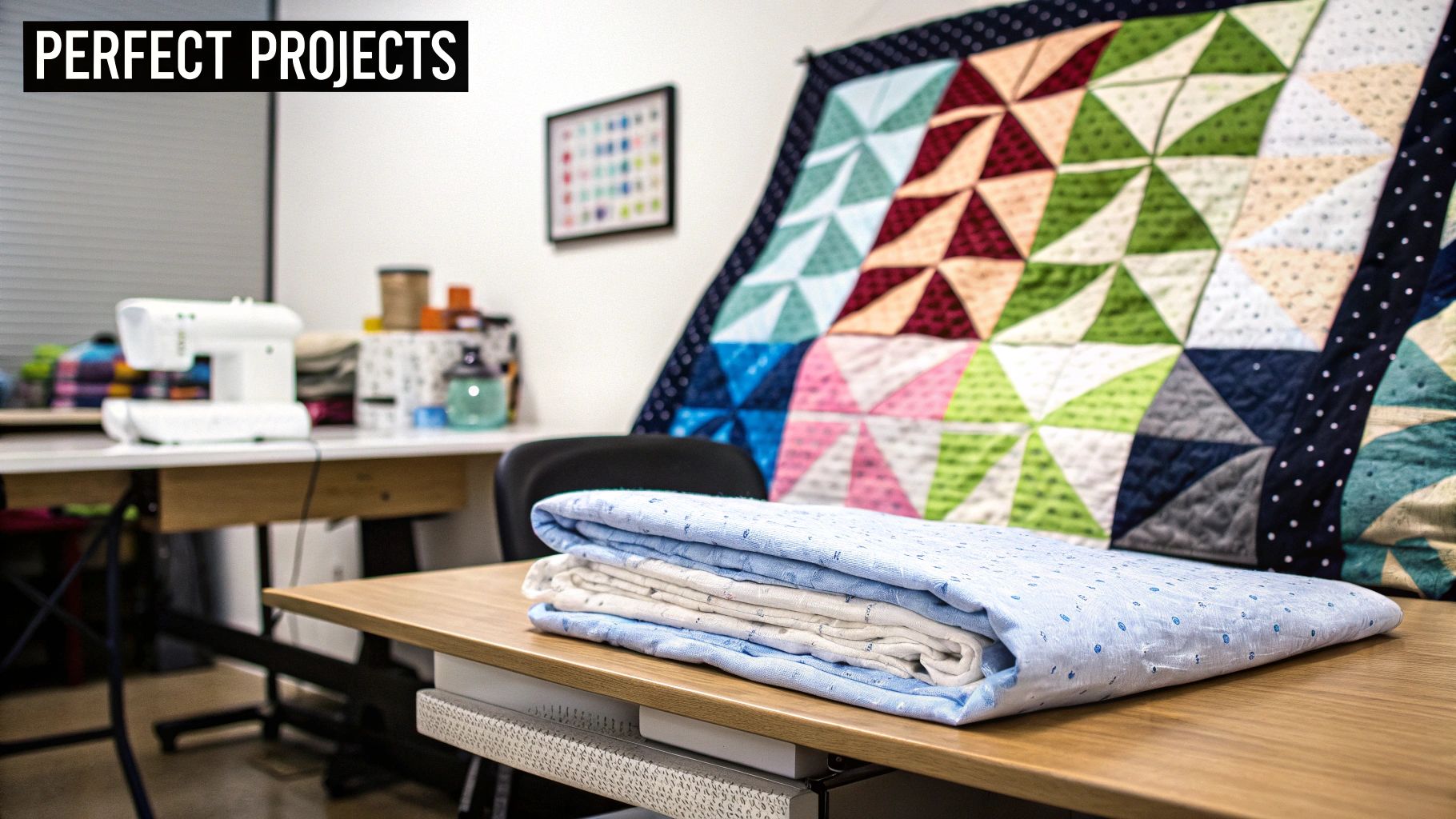
Where Warm & White Truly Shines
Some quilt designs just scream for the bright, clean canvas that Warm & White batting delivers. Because it keeps light-colored fabrics looking true, it has become the secret weapon for specific styles where color integrity is everything.
- Modern Quilts with Negative Space: You know those stunning, minimalist quilts with huge areas of solid white or cream? Warm & White is what keeps that negative space brilliantly crisp and free of shadowing. It makes the pieced elements pop right off the fabric.
- Baby Quilts and Children’s Bedding: A baby quilt has to be two things: soft and washable. This batting nails both. It provides a gentle, huggable feel but is also tough enough to handle countless trips through the laundry without bunching up or losing its shape.
- Pastel and Low-Volume Quilts: When you're working with soft pastels, subtle prints, or delicate low-volume fabrics, Warm & White is practically a necessity. It acts like a brightener from the inside out, preventing those gentle colors from looking muddy or dull.
The incredible durability of this batting—it can hold up through as many as 40 machine cycles without clumping—makes it a huge favorite for quilt shops and makers selling their goods. In fact, many longarm studios report a 20-30% jump in quilting speed because its stable internal scrim prevents shifting. That stability helps cut down on labor costs and boost output, a big win for small businesses. You can learn more about recent quilt batting market trends here.
A Perfect Partner for Every Quilting Method
One of the best things about Warm & White batting is how well it behaves, no matter how you choose to quilt. From a high-speed longarm to the quiet rhythm of hand stitching, it’s engineered to make the whole process smoother and more enjoyable.
It simply adapts to your technique, giving you stability where you need it and a soft touch where it counts.
For the Longarm Quilter
Longarm machines put batting under a lot of tension. This is where the internal scrim—a thin, non-woven stabilizer sheet inside the batting—becomes a longarmer’s best friend.
The scrim is what keeps the batting from stretching, distorting, or tearing under the pull of the machine. This means you can quilt with confidence, knowing your patterns will stay precise and your quilt top will finish perfectly square.
For the Domestic Machine Quilter
If you quilt on your home sewing machine, you are going to love how easily this batting cooperates. It needles smoothly without causing skipped stitches or puckering, which can be a common headache with lower-quality battings.
Most importantly, it has a fantastic reputation for resisting "bearding." That's the annoying thing that happens when tiny batting fibers poke through your quilt top or backing. The stabilized fibers in this blend stay put, keeping your quilt’s surface looking clean and professional.
For the Hand Quilter
Hand quilters are always looking for a batting that lets the needle glide through the layers without a fight. Warm & White is an excellent choice, offering a satisfying, smooth stitching experience. Its low loft means you aren't wrestling with unnecessary bulk, which helps reduce hand fatigue and lets you create those beautiful, even stitches that make hand quilting so special.
Why Buying Batting by the Roll Is a Smart Move
If you’ve been quilting for a little while, I’m sure this has happened to you. You’re deep in the creative flow, your quilt top looks incredible... and then you realize you’re completely out of batting. It's a momentum killer!
Buying your batting by the roll is the next logical step for any quilter who's serious about their craft. It's the difference between treating quilting as a one-off project and embracing it as a true passion or business. Think of it like a chef buying spices in bulk instead of tiny jars—it just makes sense, saving you money and making sure you’re never caught empty-handed.
Unlock Major Cost Savings
Let's talk about the most obvious win: the money you'll save. When you grab one of those pre-packaged batts off the shelf, you're paying a big premium for the convenience of having it cut and folded for you. Buying a full roll of warm & white batting slashes your cost per square foot, and the difference is huge.
Over just a handful of quilts, those savings really start to stack up. For a longarm quilter or someone running a small quilting business, this isn't just a nice little bonus. It's a direct boost to your bottom line that lets you price your services more competitively or simply enjoy a healthier profit margin.
The Power of Perfect Consistency
Have you ever finished two quilts using the "same" brand of batting, only to feel a subtle difference between them? Even with modern manufacturing, tiny variations in loft and feel can happen from one batch to the next.
When you buy a single, continuous roll, you get perfect consistency from start to finish. Every single quilt you make will have the exact same beautiful drape, the same feel, and the same reliable performance.
For professional quilters, this kind of consistency isn't just nice—it's essential. Your reputation is built on delivering a product your clients can count on, and a roll of batting ensures your signature quality never wavers.
Streamline Your Quilting Workflow
Honestly, the sheer convenience might be the best part. Imagine never again having to drop everything for a frantic, last-minute run to the fabric store or waiting anxiously for an online order to arrive.
Having a roll of batting ready to go in your studio means you can start a new project the moment inspiration hits. It completely eliminates those frustrating delays and lets you move seamlessly from one quilt to the next. For anyone thinking about making the leap, our article on buying wholesale quilt batting rolls has some great pointers. This smooth, uninterrupted workflow is an absolute game-changer.
Choosing the Right Roll Width
Batting rolls are sold in standard widths that are designed to fit common quilt sizes. Picking the right one means less waste and no more tedious piecing of batting scraps to get the size you need.
Here’s a quick breakdown of the common sizes:
- 96-Inch Width: This is a fantastic all-rounder. It's perfect for generous throw quilts, twin beds, and most full-sized quilts.
- 108-Inch Width: My go-to for queen-sized quilts. This width gives you plenty of coverage on the sides without needing to piece anything together.
- 120-Inch Width: The undisputed king for king-sized (and California king) quilts. This extra-wide option is the secret to getting a smooth, professional finish on your biggest creations.
The best width for you really depends on what you quilt most often. If you run a longarm studio and see a little bit of everything, investing in a 120-inch roll is often the smartest move. You can handle any size that comes through the door by simply cutting it down as needed.
Care and Storage for Lasting Quilts
After you’ve poured so much of yourself into a quilt, the last thing you want is for it to lose its charm after the first wash. Taking care of your quilt is the final, and maybe most important, step in the whole process. It’s what ensures your creation stands the test of time, and it all starts with how you handle the batting.
Let's walk through a few simple practices for both your Warm & White batting and your finished quilts. Getting this right means your quilts will stay just as beautiful as the day you took that final stitch.
To Pre-Wash or Not to Pre-Wash
This is the age-old debate in quilting circles, isn't it? But here’s the good news: with a modern blend like Warm & White, the answer is pretty straightforward. This high-quality 80/20 batting is made to shrink very little—we’re talking less than 3%. Most quilters, especially my fellow longarmers, pull it right off the roll and get to work.
When you skip the pre-wash, the batting, fabric, and thread all shrink together just a tiny bit in that first wash. This is what creates that wonderful, slightly crinkled, vintage texture we all love. It gives the quilt instant character.
Pro Tip: The only time I’d strongly recommend pre-washing your batting is if you've already pre-washed your quilt top and backing fabrics. Consistency is key here. Washing everything beforehand ensures it all shrinks at the same rate, preventing any weird puckering or distortion down the line.
How to Wash Your Finished Quilt
The thought of washing a finished quilt can be nerve-wracking, but it doesn't have to be. Just follow these simple steps to keep it soft, vibrant, and perfectly intact.
- Machine Wash Cold: Always use a gentle cycle with cold water. This is your best defense against colors bleeding and it's much kinder to the cotton fibers.
- Use a Mild Detergent: Stick with something gentle and color-safe. Harsh chemicals and bleach are the enemies of a beautiful quilt; they can break down both the fabric and the batting.
- Tumble Dry on Low: Go low and slow in the dryer. I like to toss in a few wool dryer balls to help fluff things up and ensure the quilt dries evenly. You can also pull it out while it’s still slightly damp and lay it flat to finish air-drying.
Storing Batting Rolls and Quilts
Proper storage protects your investment, whether it’s a fresh roll of batting or a quilt you’ve treasured for years. Your main goals are to avoid sunlight, moisture, and pests.
If you buy batting by the roll, the simplest way to keep it pristine is to store it in the plastic bag it came in. Tuck it under a bed or on a high closet shelf where it’s out of the way and safe from direct sunlight, which can weaken the fibers over time. A dedicated studio rack is fantastic, but not necessary.
For your finished quilts, try to avoid long-term storage in plastic bags or bins. They can trap moisture and lead to mildew—a quilter's nightmare! Instead, fold your quilts loosely and place them in a breathable cotton or muslin bag. Every few months, take them out and refold them differently to prevent those stubborn permanent creases from setting in.
Questions From the Quilting Community
Even after digging into the details, you might still have a few questions about how Warm & White batting will really behave in your next quilt. Let's walk through some of the most common things quilters ask, so you can choose your batting with complete confidence.
Getting these answers sorted out is the key to avoiding those little "I wish I'd known" moments and making sure your finished quilt is everything you hoped it would be.
Do I Really Need to Pre-Wash Warm & White Batting?
Honestly, probably not. Most quilters, especially those of us on a longarm, use Warm & White batting straight off the roll. It’s made to have very little shrinkage—we're talking 3% or less—which is exactly what creates that lovely, slightly crinkled, vintage texture after the quilt's first wash.
The one exception? If you've already pre-washed your quilt top and backing fabrics. In that case, you’ll want to wash the batting, too. This just ensures all three layers will shrink at the same rate. Just give it a gentle soak in lukewarm water, carefully squeeze out the extra water (don't wring it!), and let it air dry.
What's the Furthest Apart I Can Quilt My Stitches?
This is where Warm & White really shines. Thanks to the scrim stabilizer needle-punched into its core, you can safely quilt up to 8-10 inches apart. That’s a huge amount of freedom!
This generous spacing means the internal fibers won't shift or bunch up over time, even with lots of use and washing. It makes the batting incredibly versatile, working just as well for intricate, dense quilting as it does for modern quilts that celebrate big, open areas of negative space.
A Little Insider Insight: That 8-10 inch quilting distance is a huge reason why Warm & White is such a go-to in the longarm world. It gives us the stability we need with the creative freedom we want, all without compromising the quilt's longevity.
Is This Batting Good for Hand Quilting?
Oh, absolutely. It's a dream to work with by hand. The 80% cotton gives it a soft, breathable feel that your needle will just glide right through.
At the same time, that little bit of 20% polyester adds just enough stability to keep the batting from pulling or getting distorted as you work your stitches. Its low, gentle loft also means you get beautiful, soft stitch definition without fighting against a thick, resistant batting, which can save your hands a lot of fatigue.
How Is It Different From Warm & Natural?
The biggest difference between these two workhorse battings is simply the color. Warm & White is bleached for a crisp, pure white. This is your secret weapon for any quilt using white, cream, or pale pastel fabrics, as it ensures no dingy "shadow" shows through from the inside.
On the other hand, Warm & Natural is left in its unbleached state. You'll see the natural, off-white color of the cotton, complete with those tiny, charming seed flecks. It has a more rustic, homespun vibe that’s a perfect match for quilts with darker color palettes or a more primitive, traditional style. Functionally, they're both 80/20 blends with a scrim and perform almost identically—the choice really just comes down to your fabrics.
Ready to see what a bright, stable foundation can do for your work? Take a look at our full selection of Warm & White rolls at Quilt Batting. Give your light-colored quilts the flawless finish they deserve. Find the perfect roll right here: https://quiltbatting.shop.